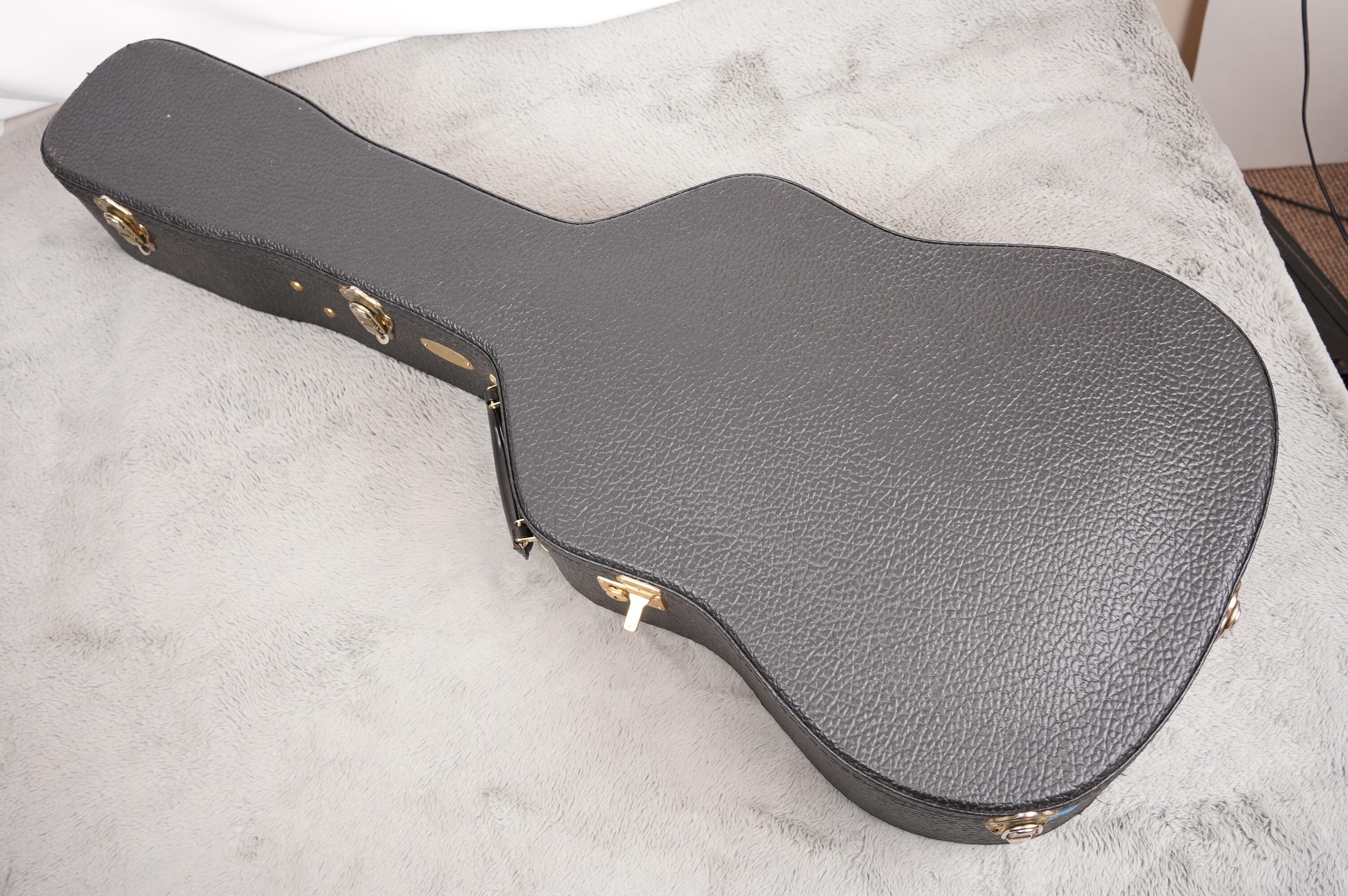


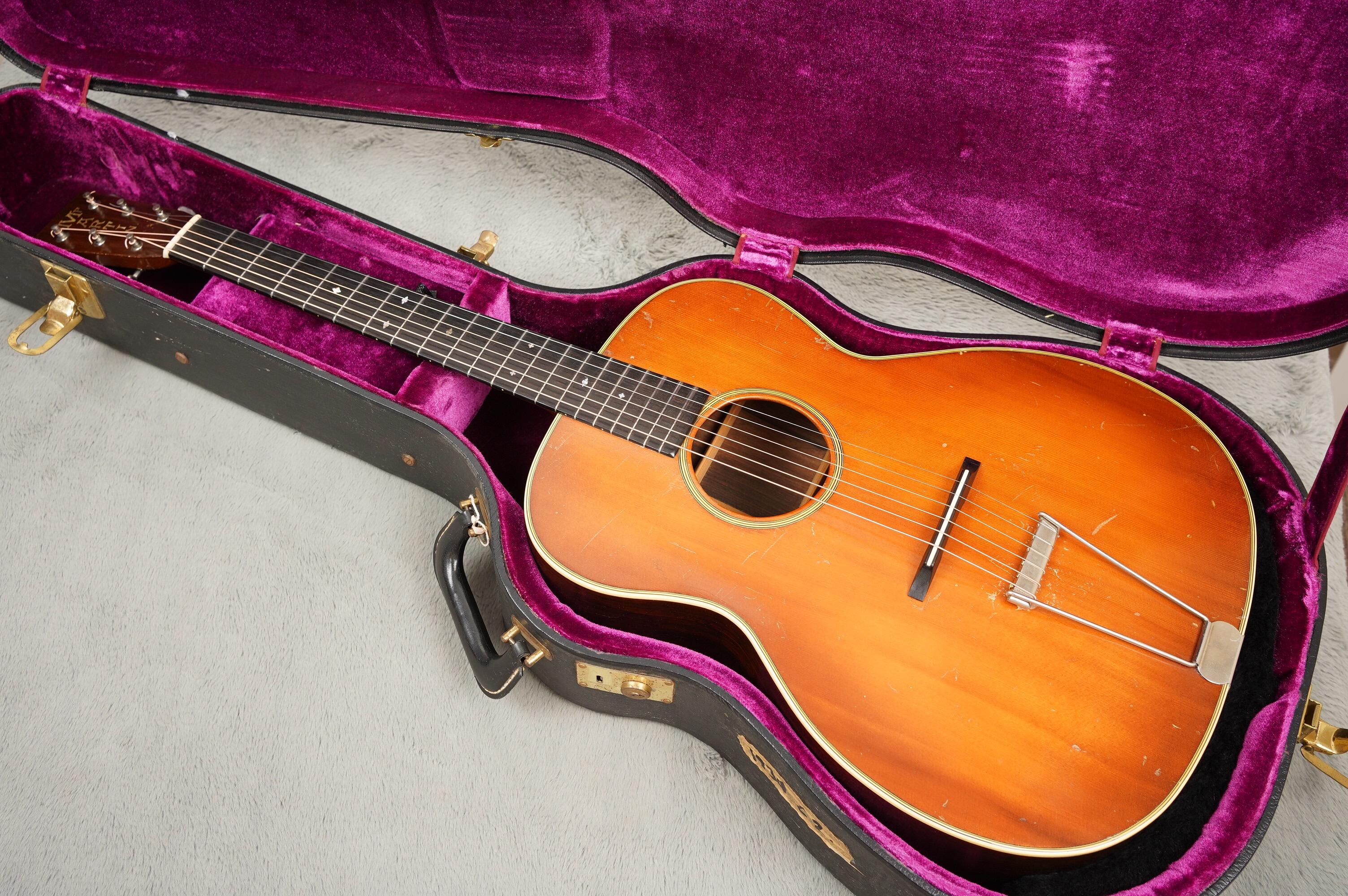
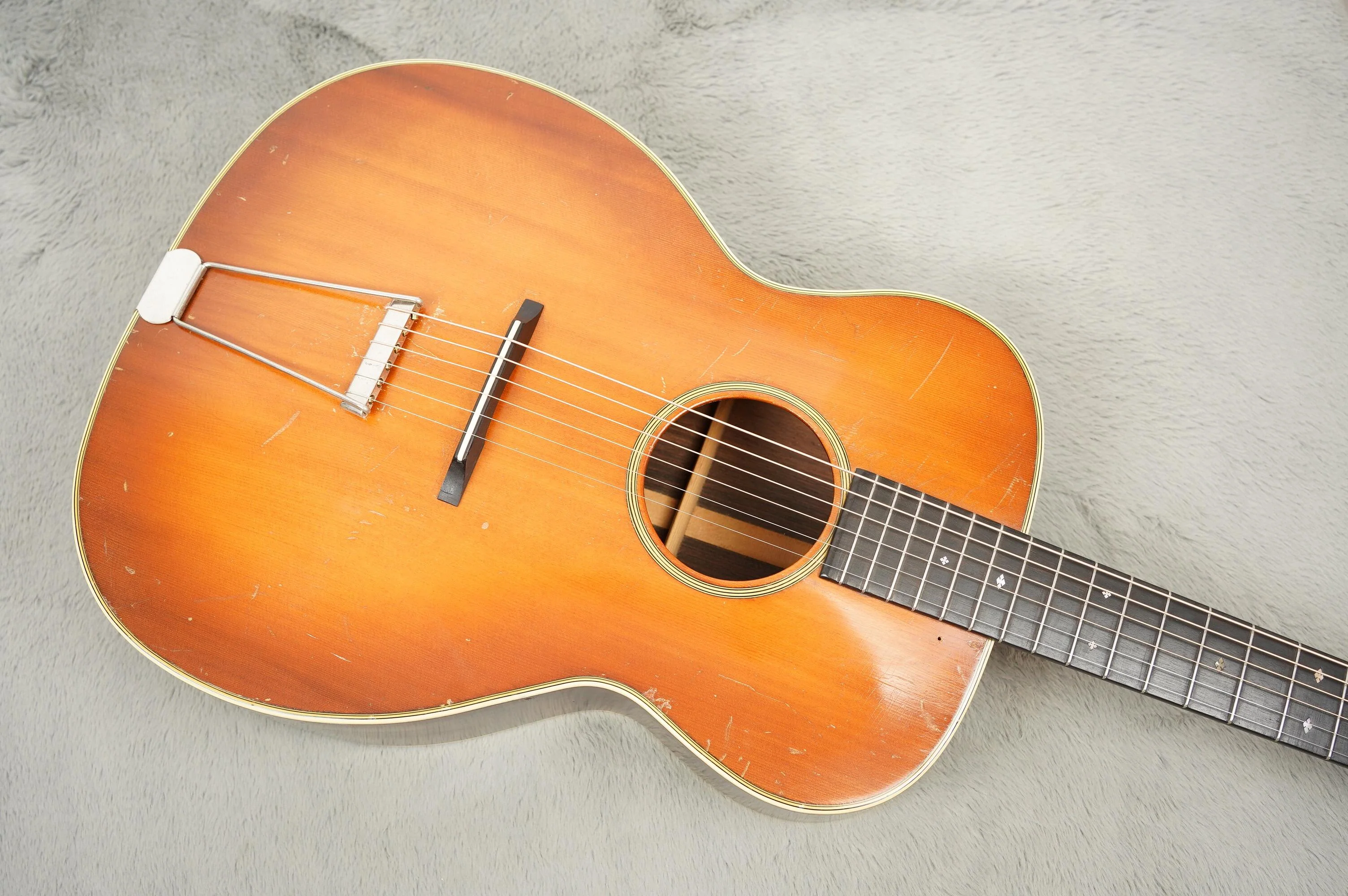
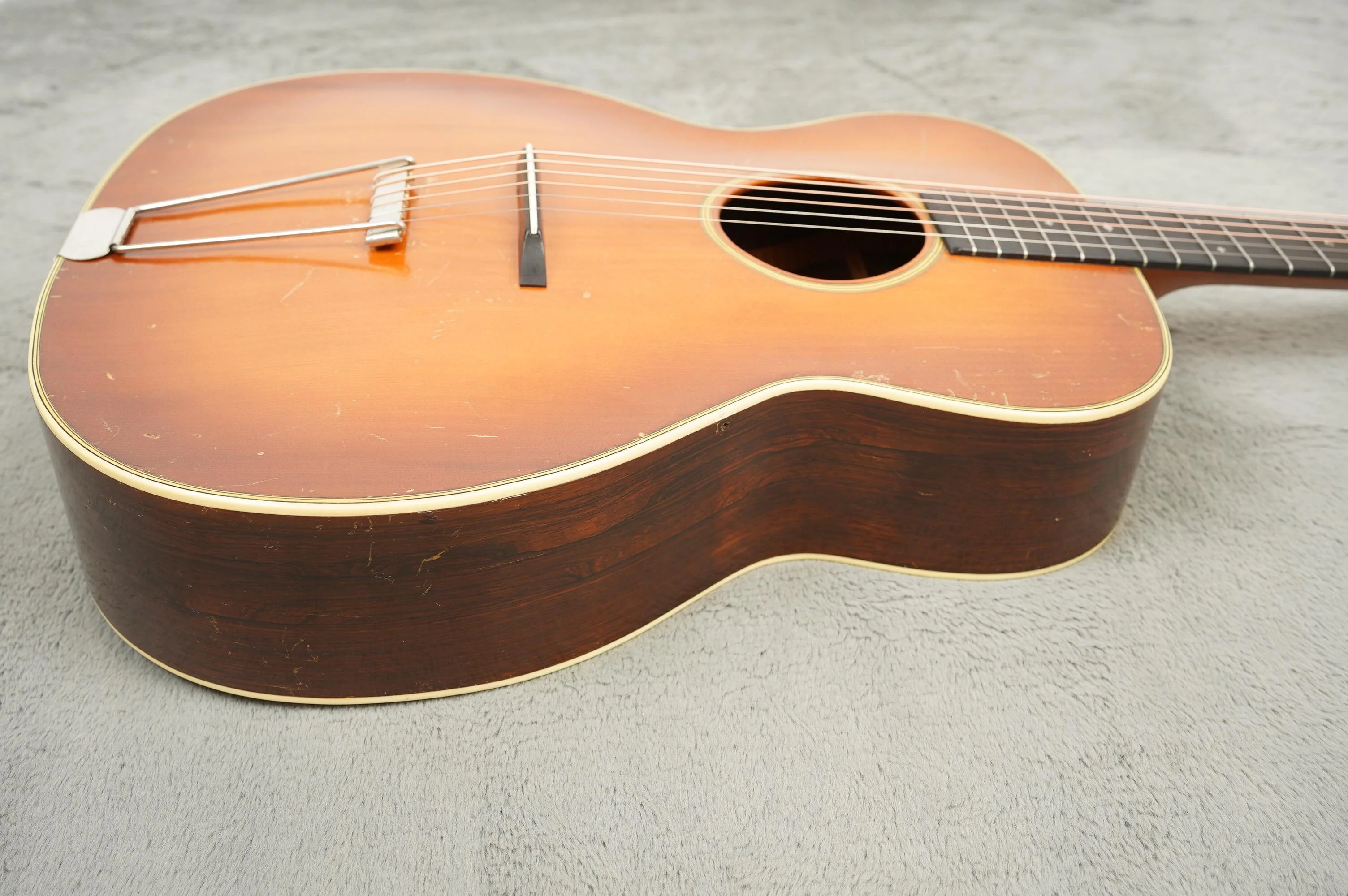






1931 Martin C-2, Shaded Top
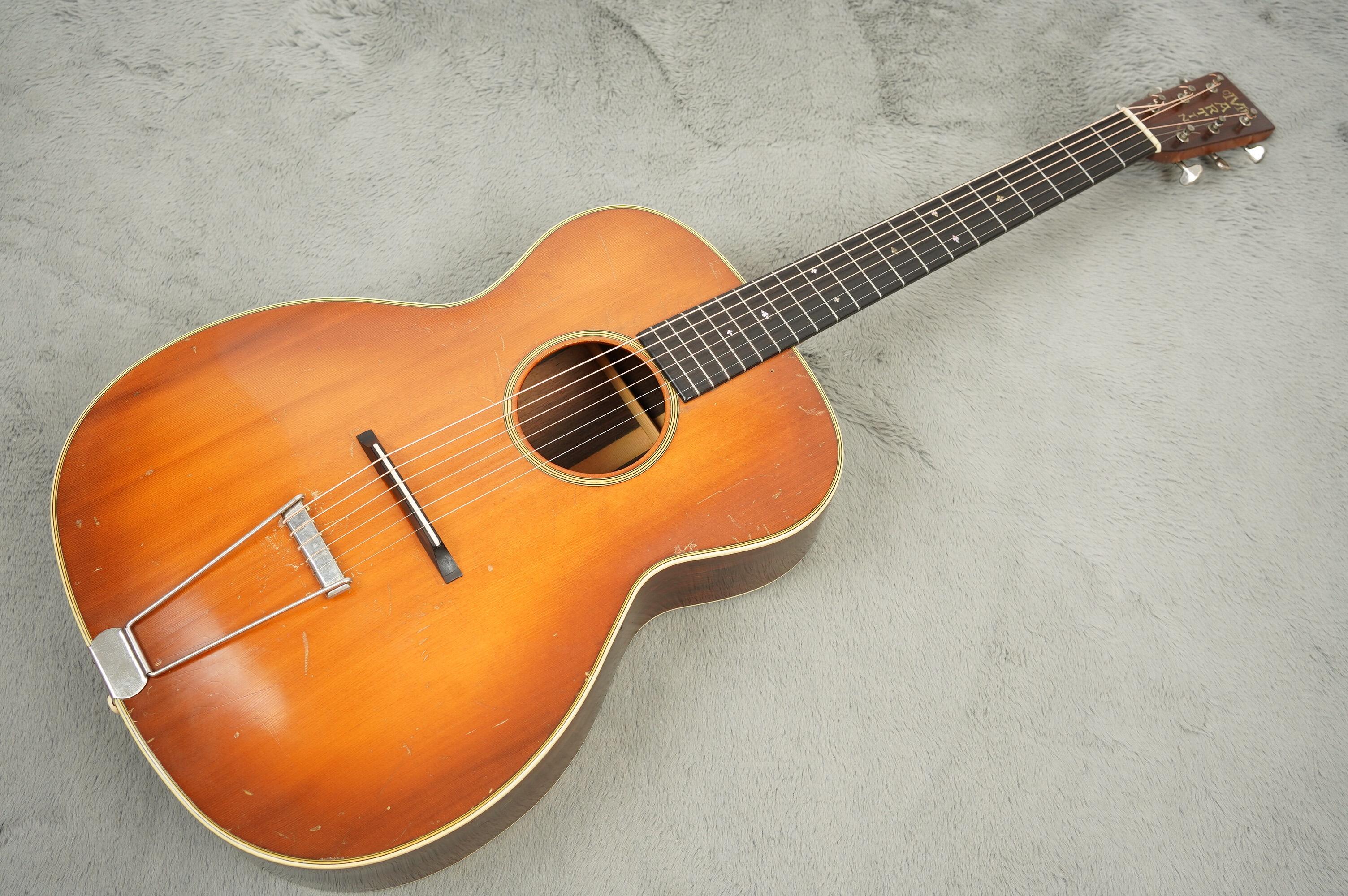
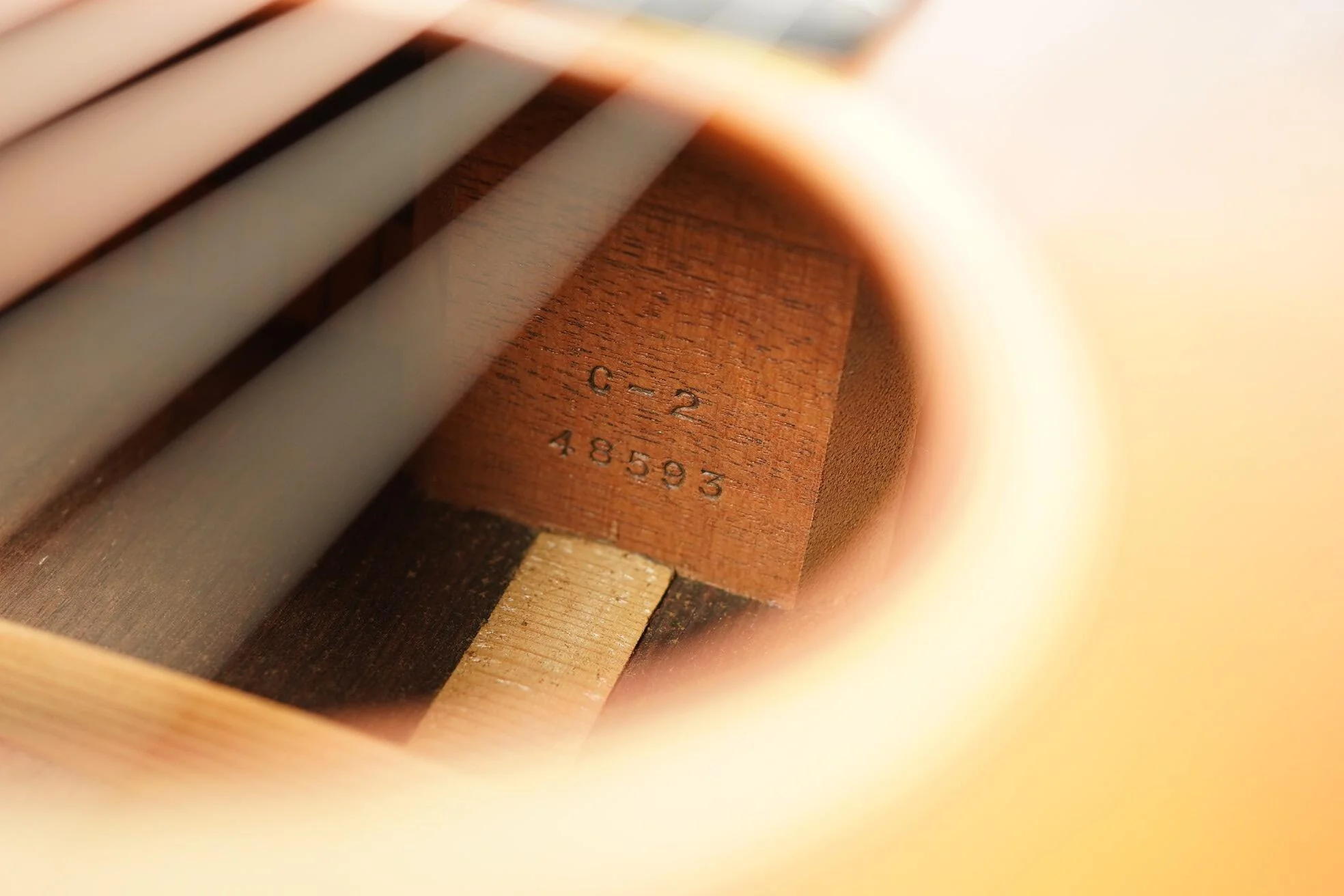
A rare and beautifully preserved piece of Martin history, this 1931 Martin C-2 is one of the cleanest and most original examples we've had. Introduced in 1931 as part of Martin’s first foray into archtop guitars, the C-series consisted of the C-1 (mahogany), C-2 (rosewood), and the more ornate C-3 (rosewood with gold hardware). All three shared a hand-carved, round-soundhole top, flat back, and a 25.4" scale length—rooted more in Martin's flattop heritage than the louder, punchier f-hole designs that were quickly defining the archtop market.
At 15" across the lower bout, with a body depth ranging from 3 3/8" to 4 1/8"—the C-2 was modestly sized for an archtop. Compared to Gibson’s L-5 at 16" wide (soon hit 17"), the Martin felt more intimate and was acoustically more refined, though notably less powerful. That gentler, more lyrical tone proved a tough sell in an era dominated by big band volume demands, and by late 1932 Martin had shifted toward f-hole designs, making early roundhole C-series models like this one relatively scarce today.
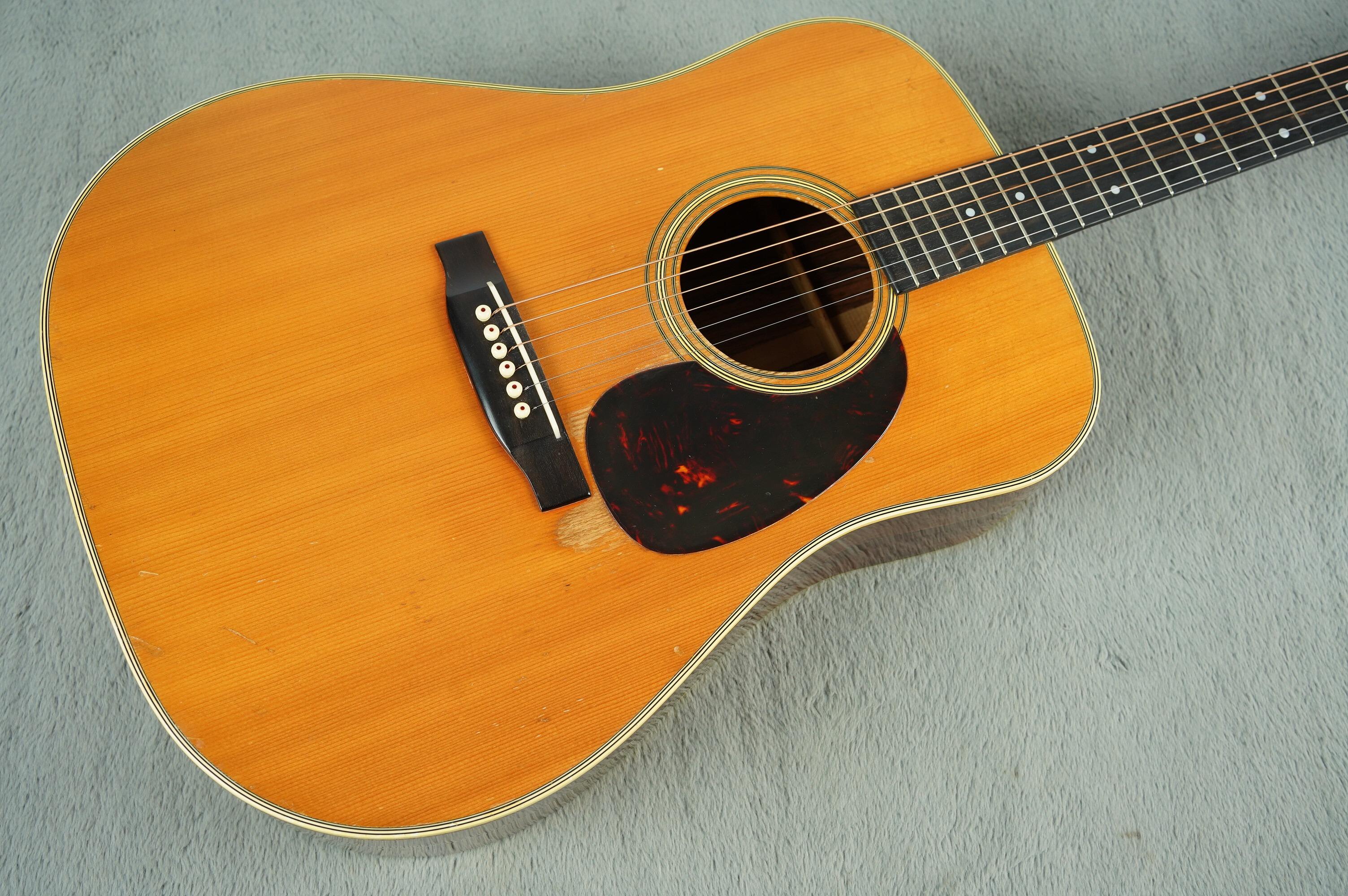
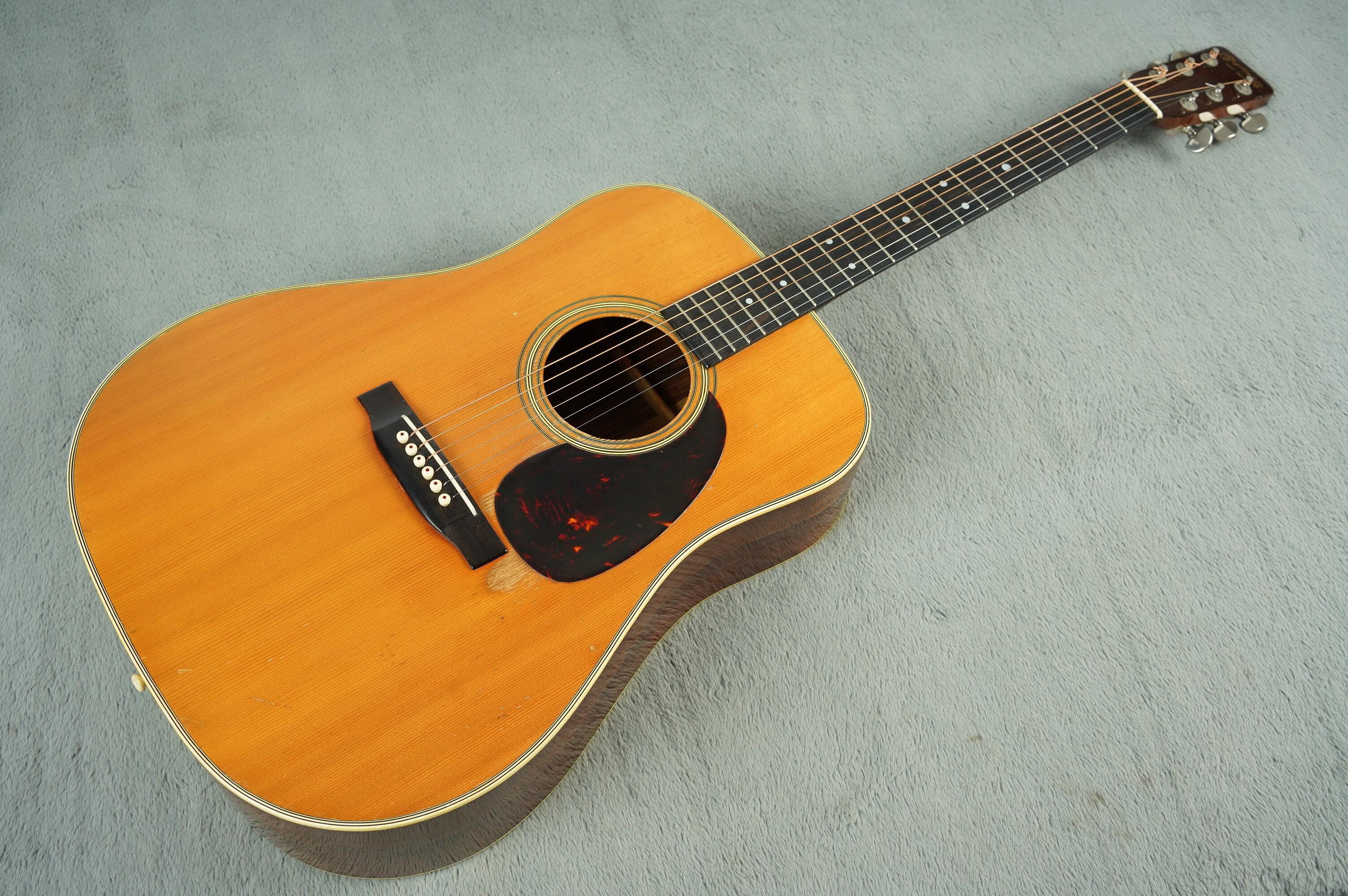
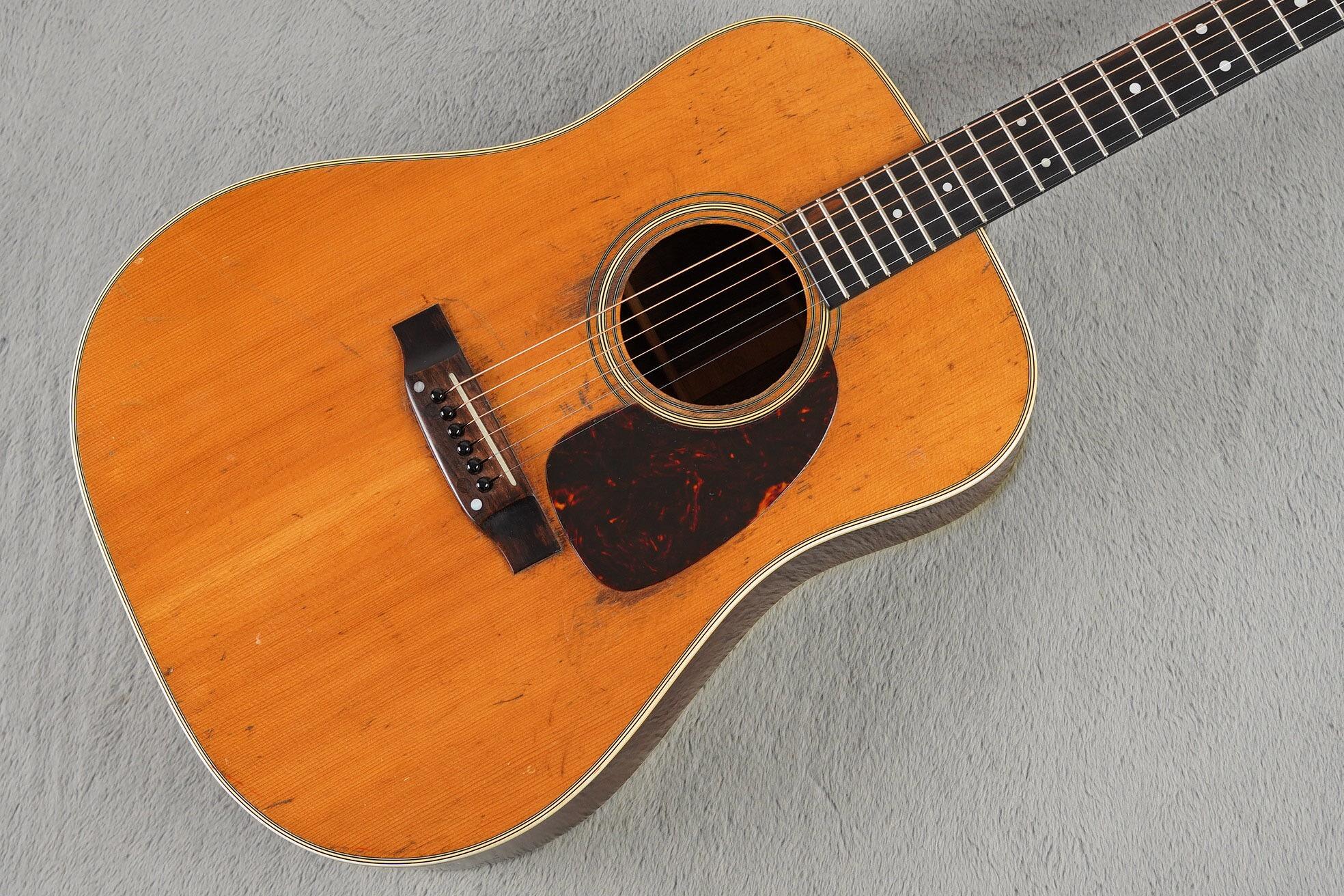
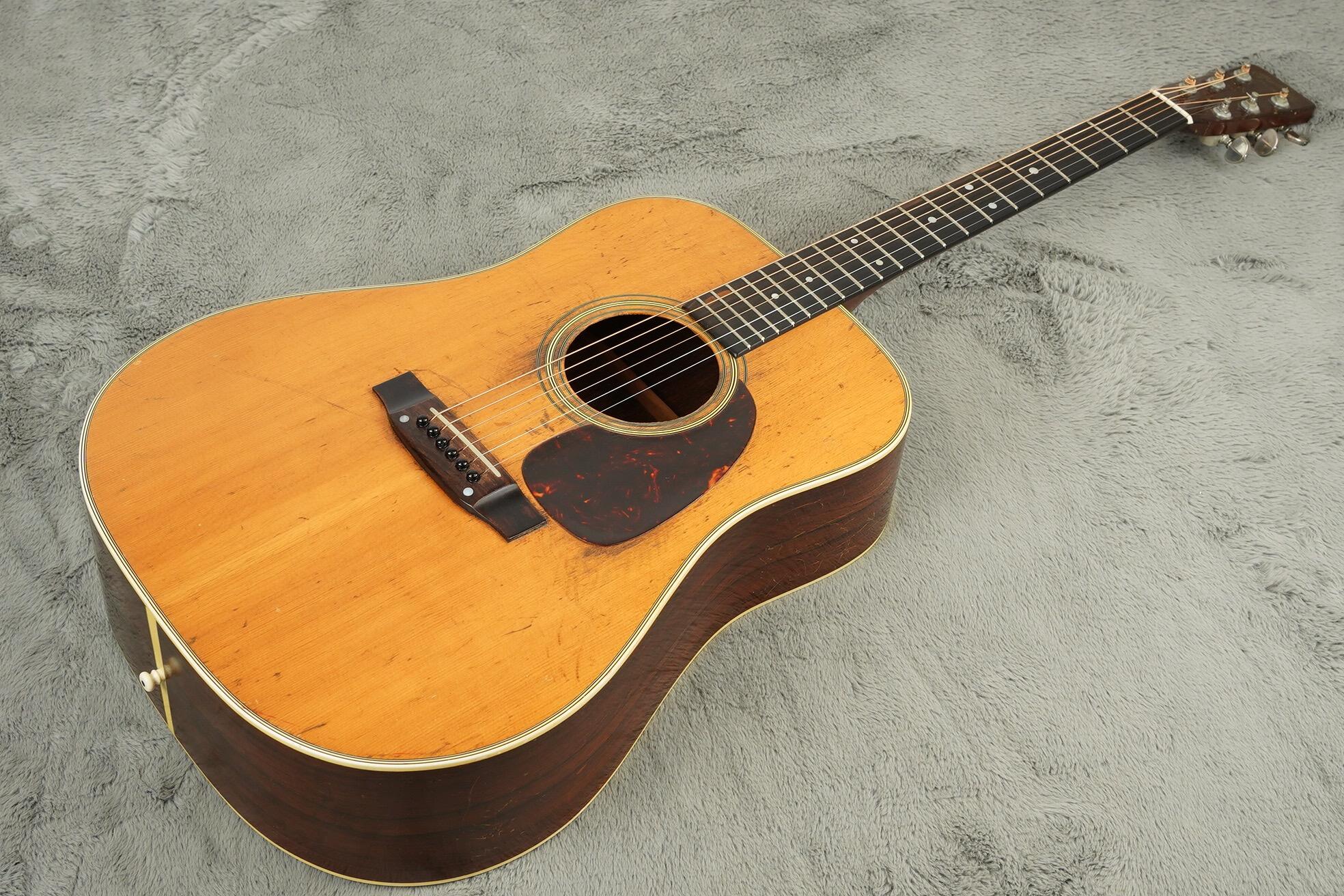
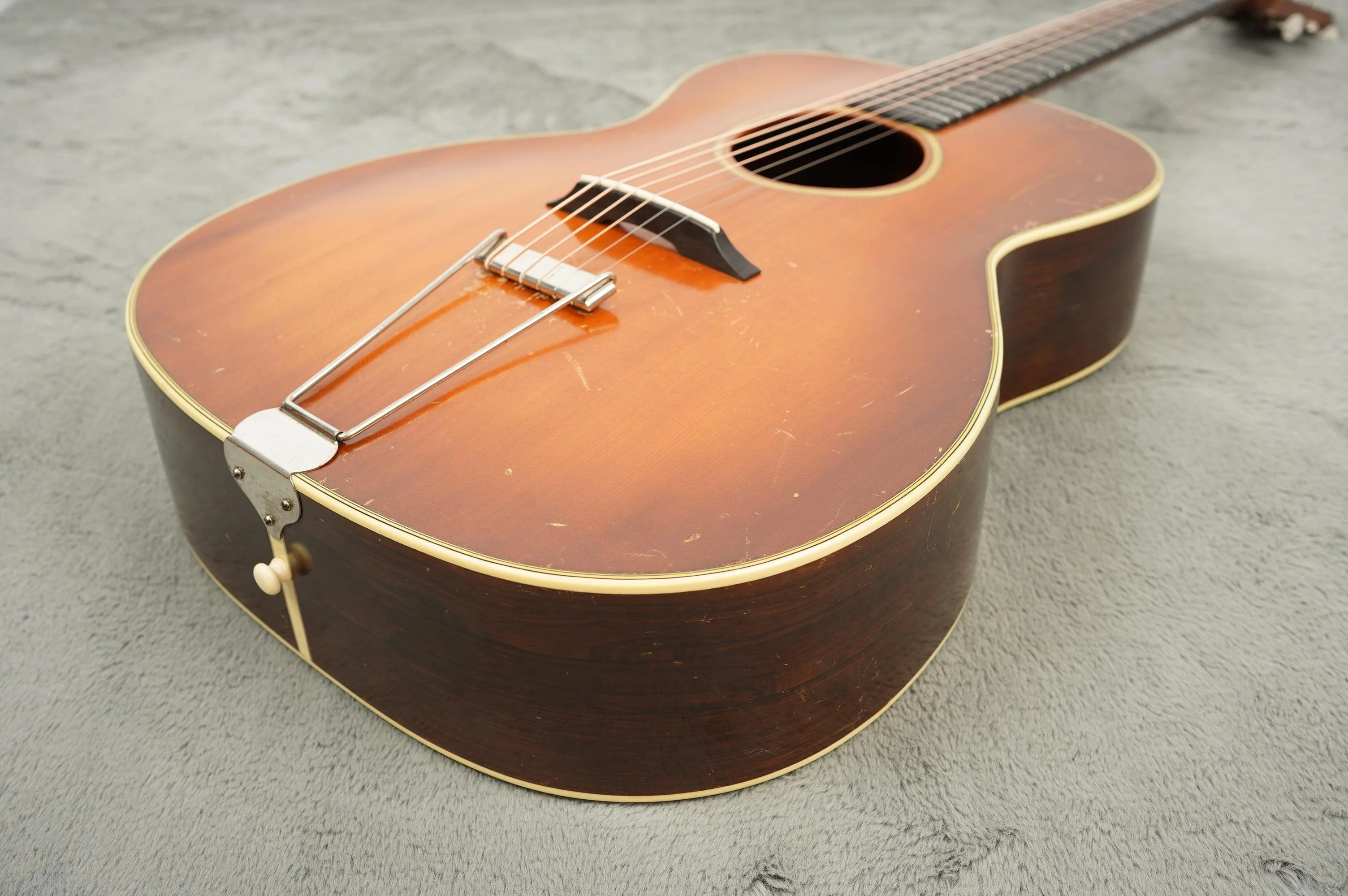
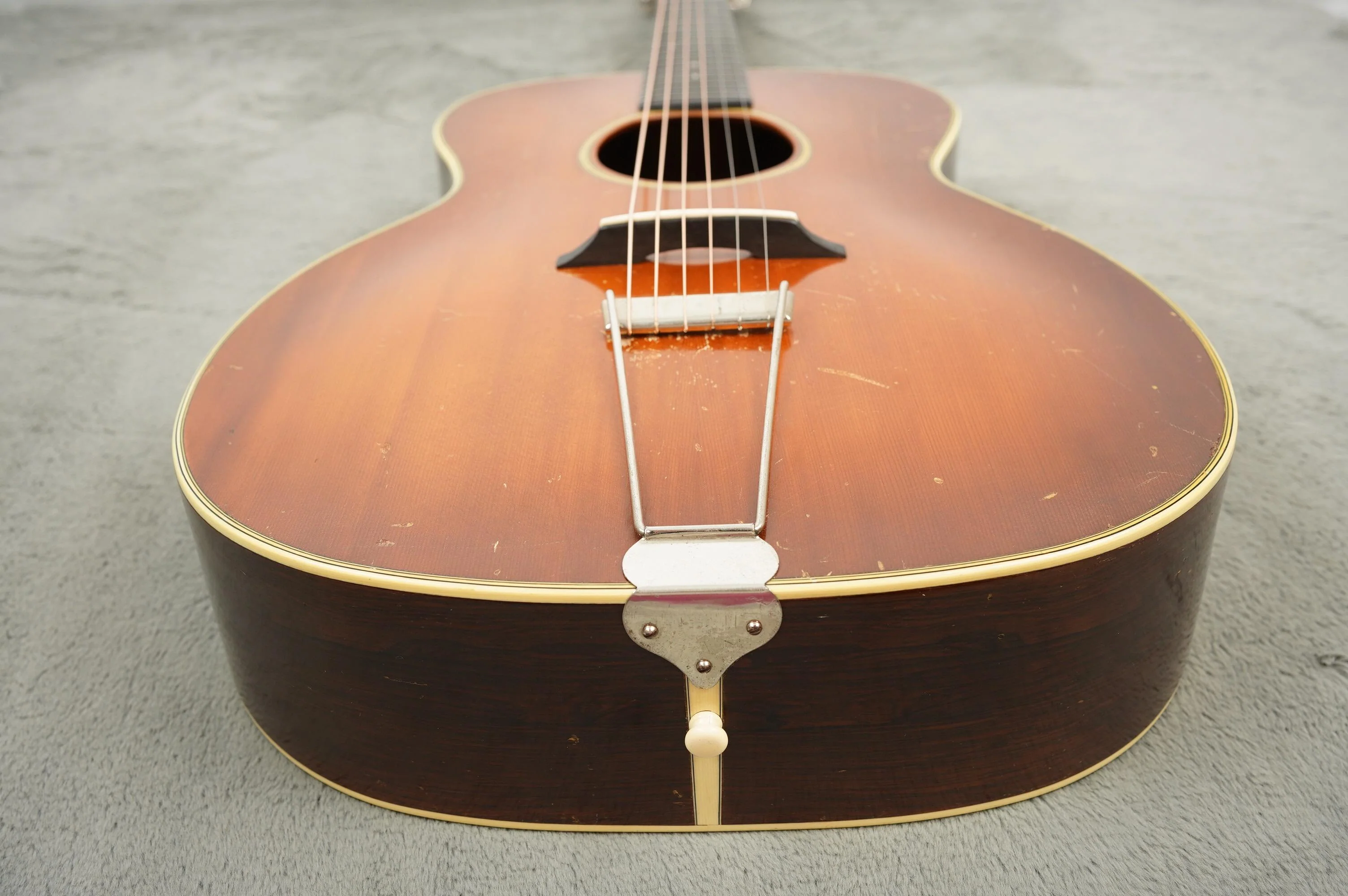
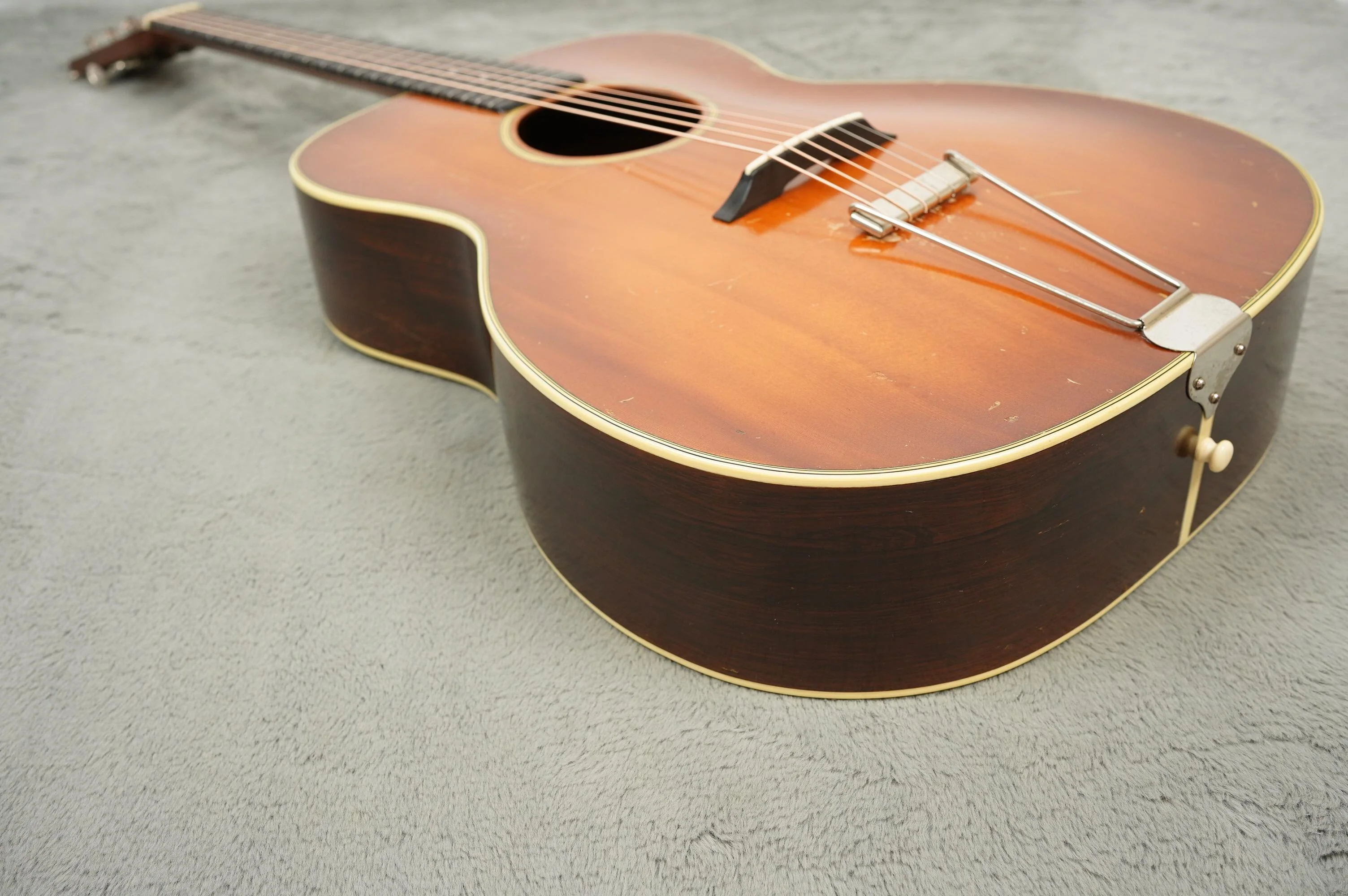
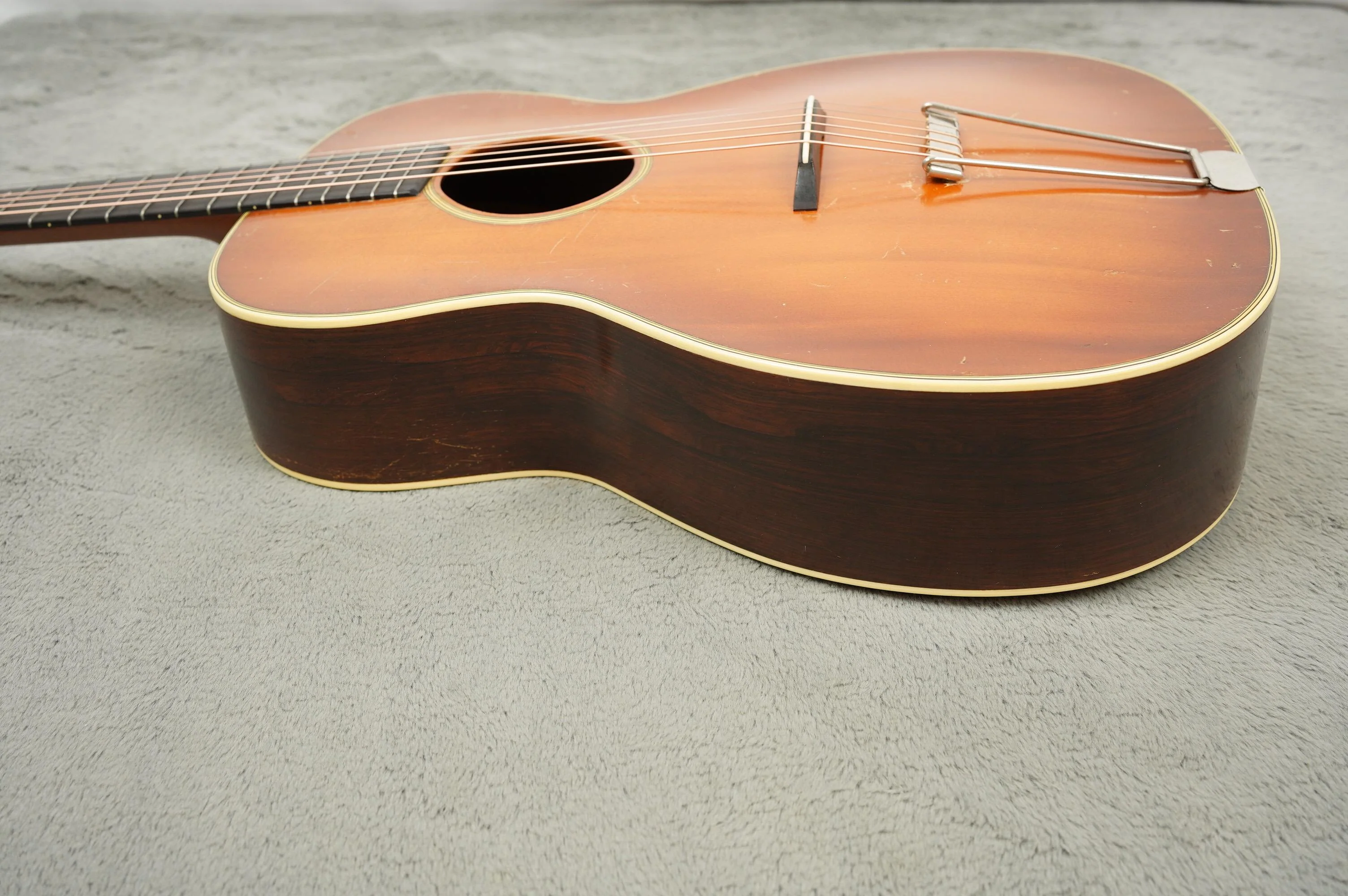
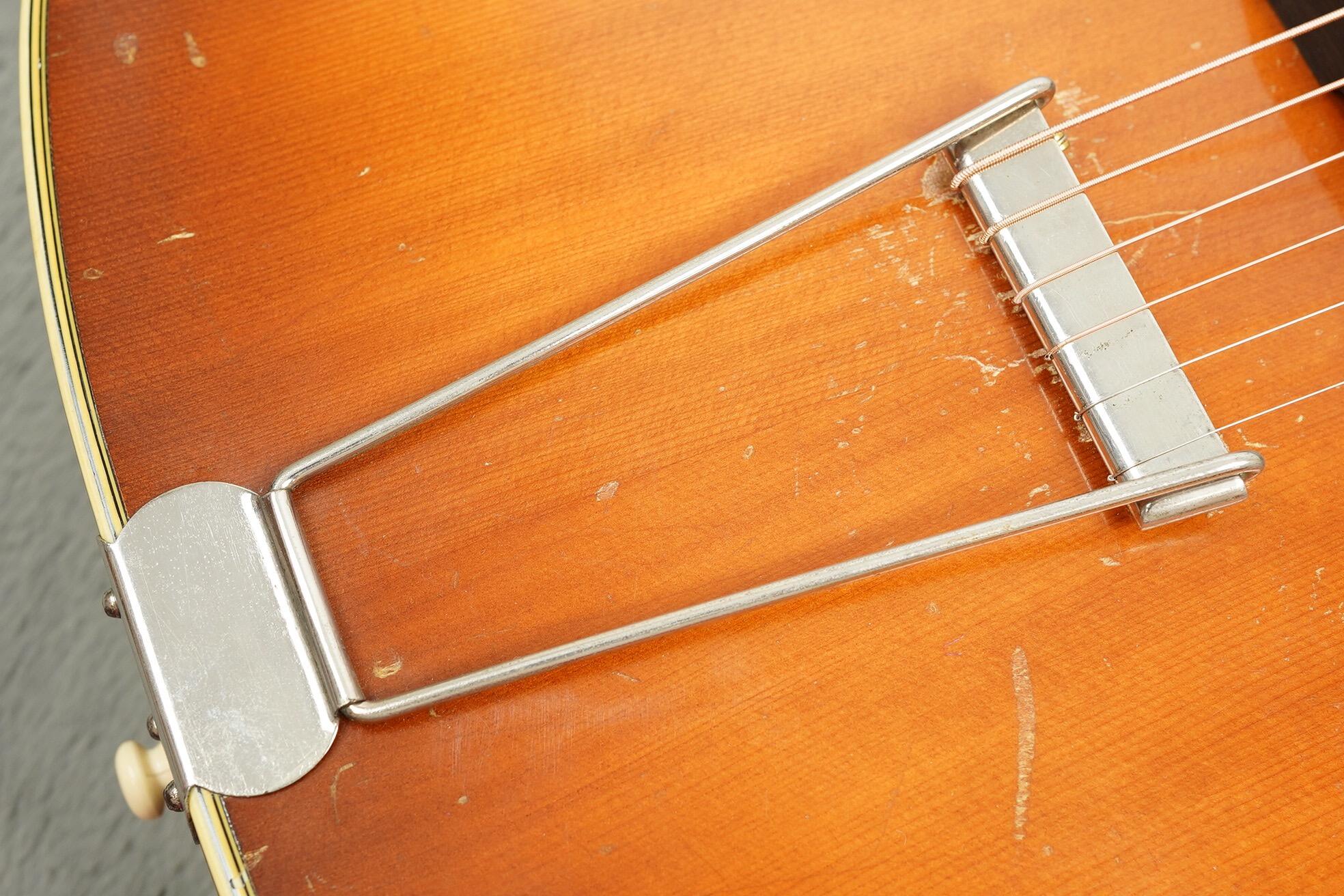
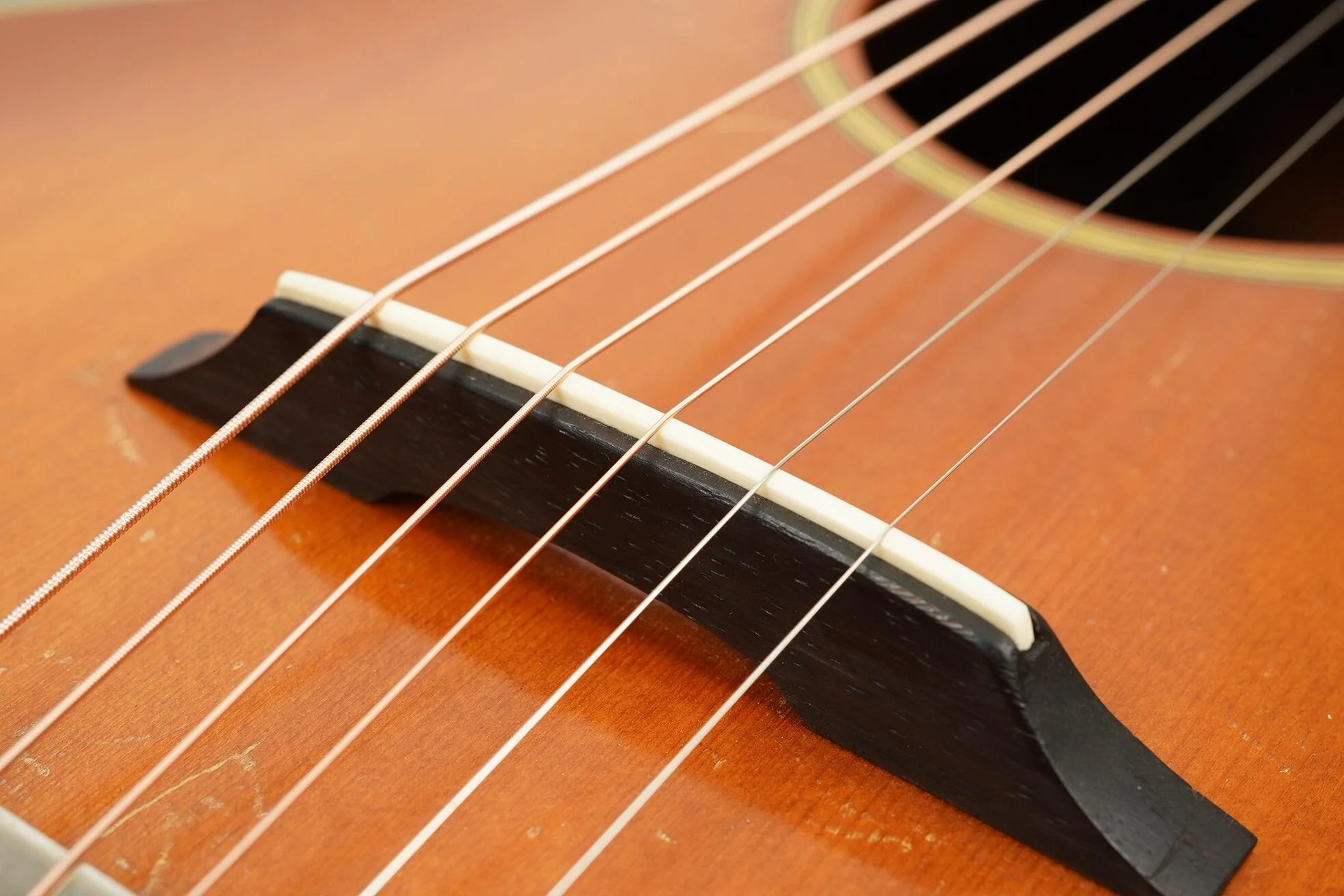
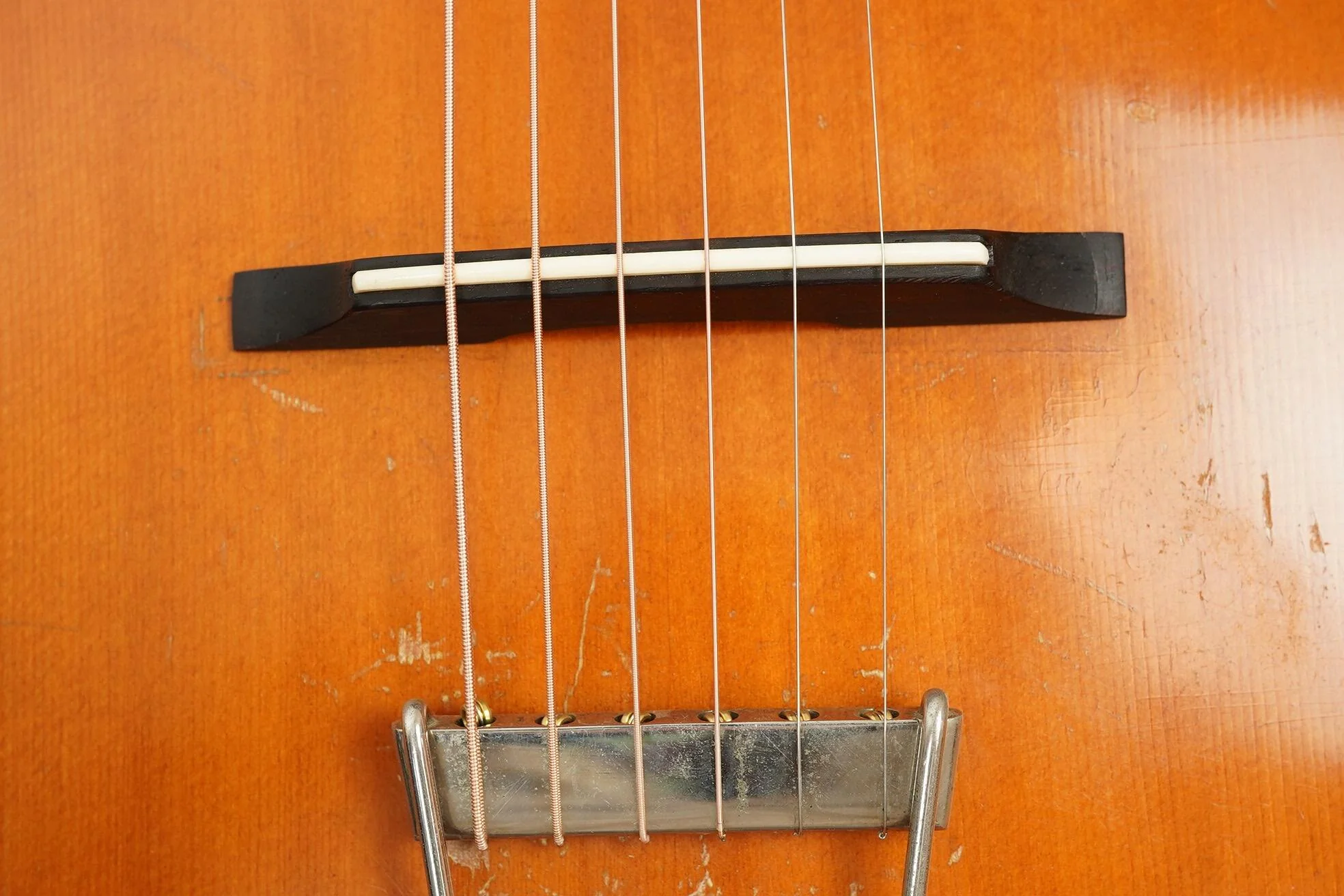
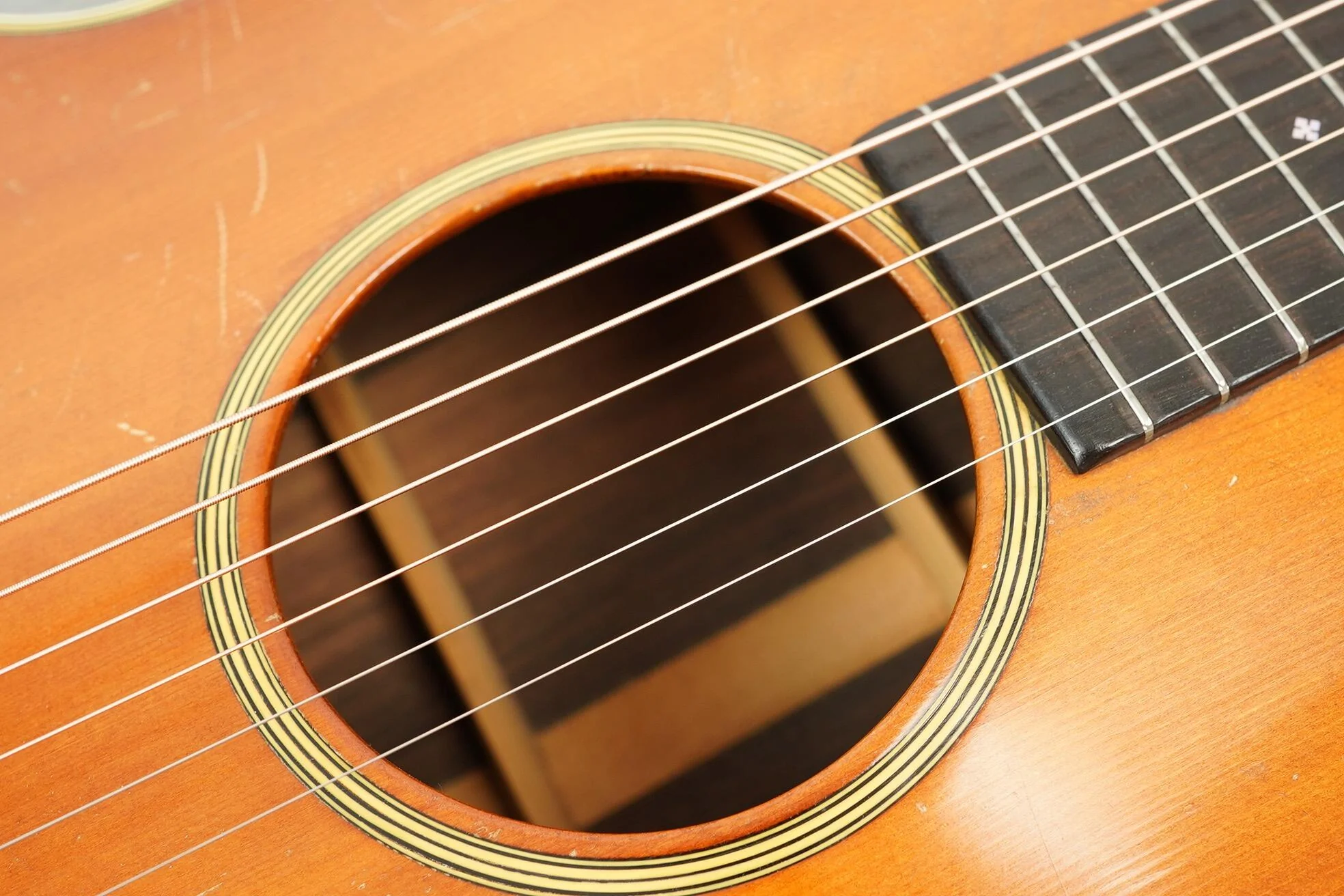
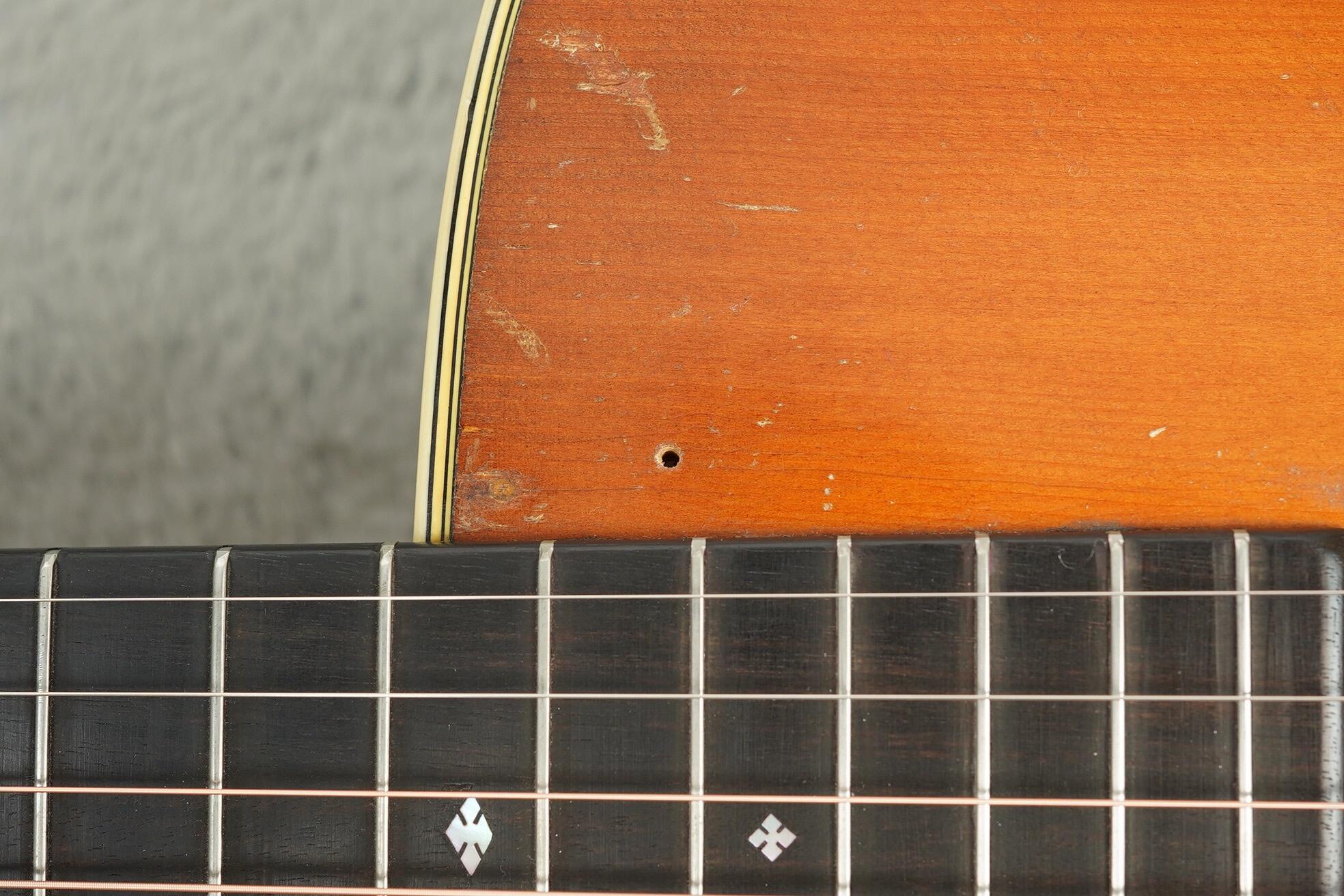
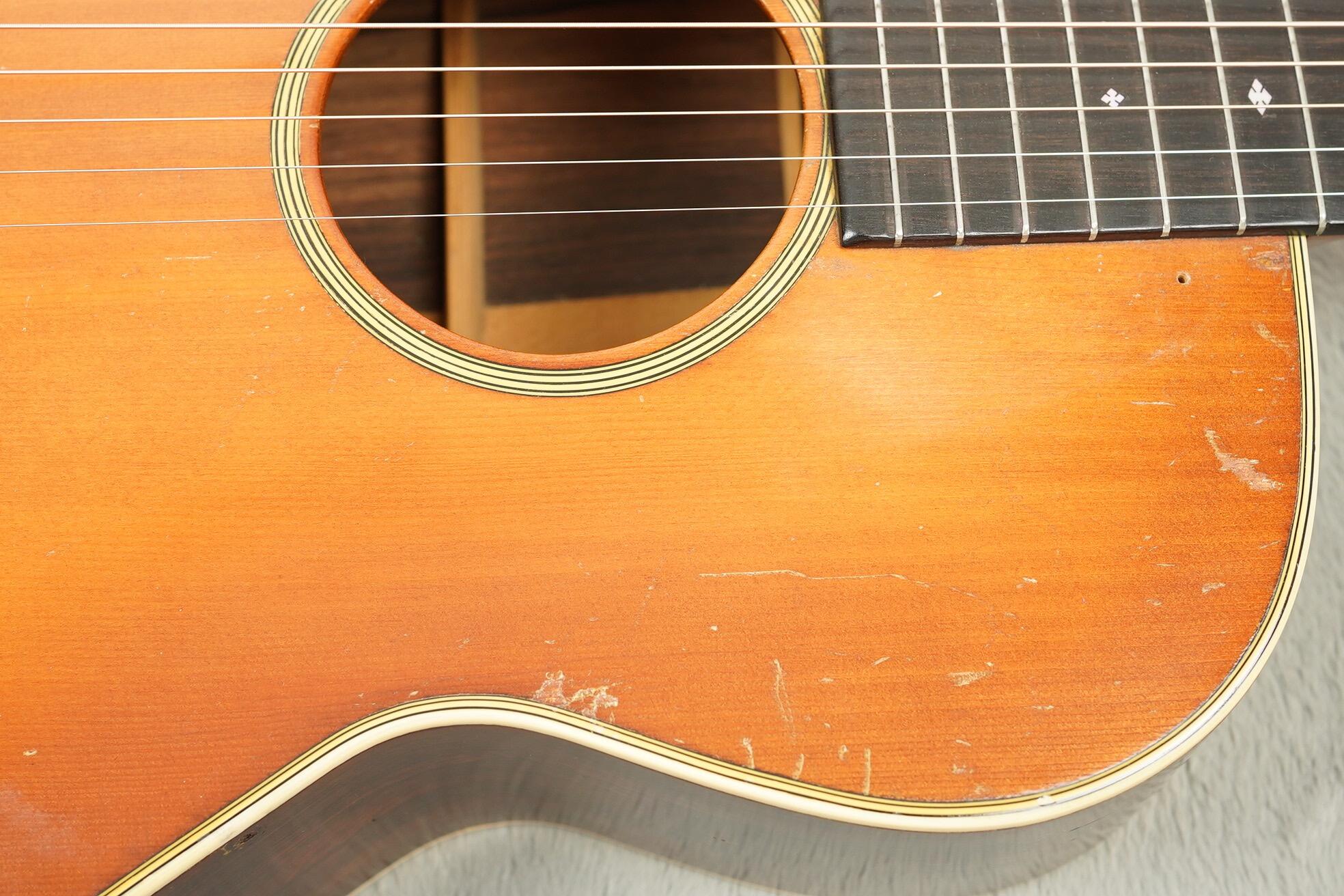
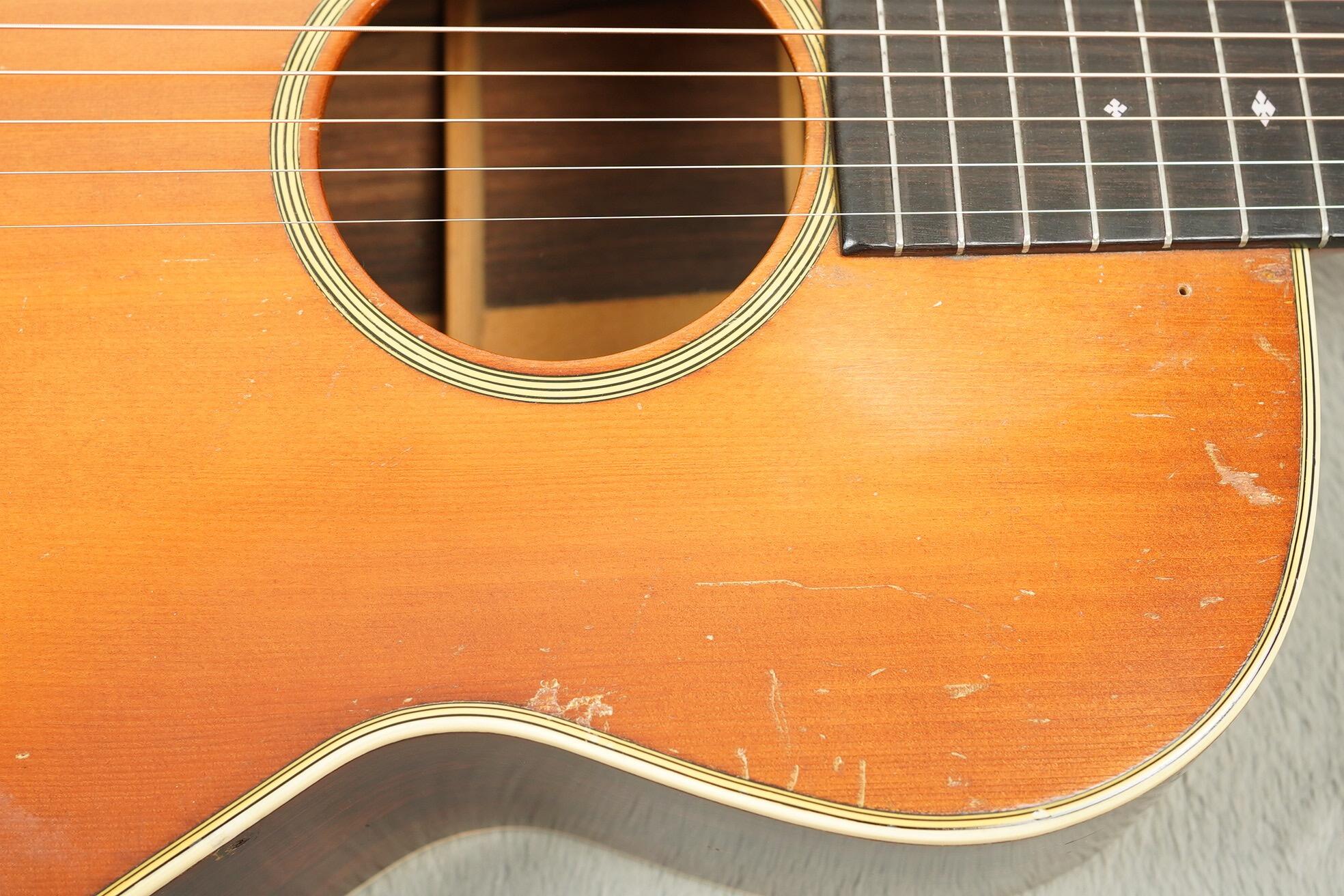
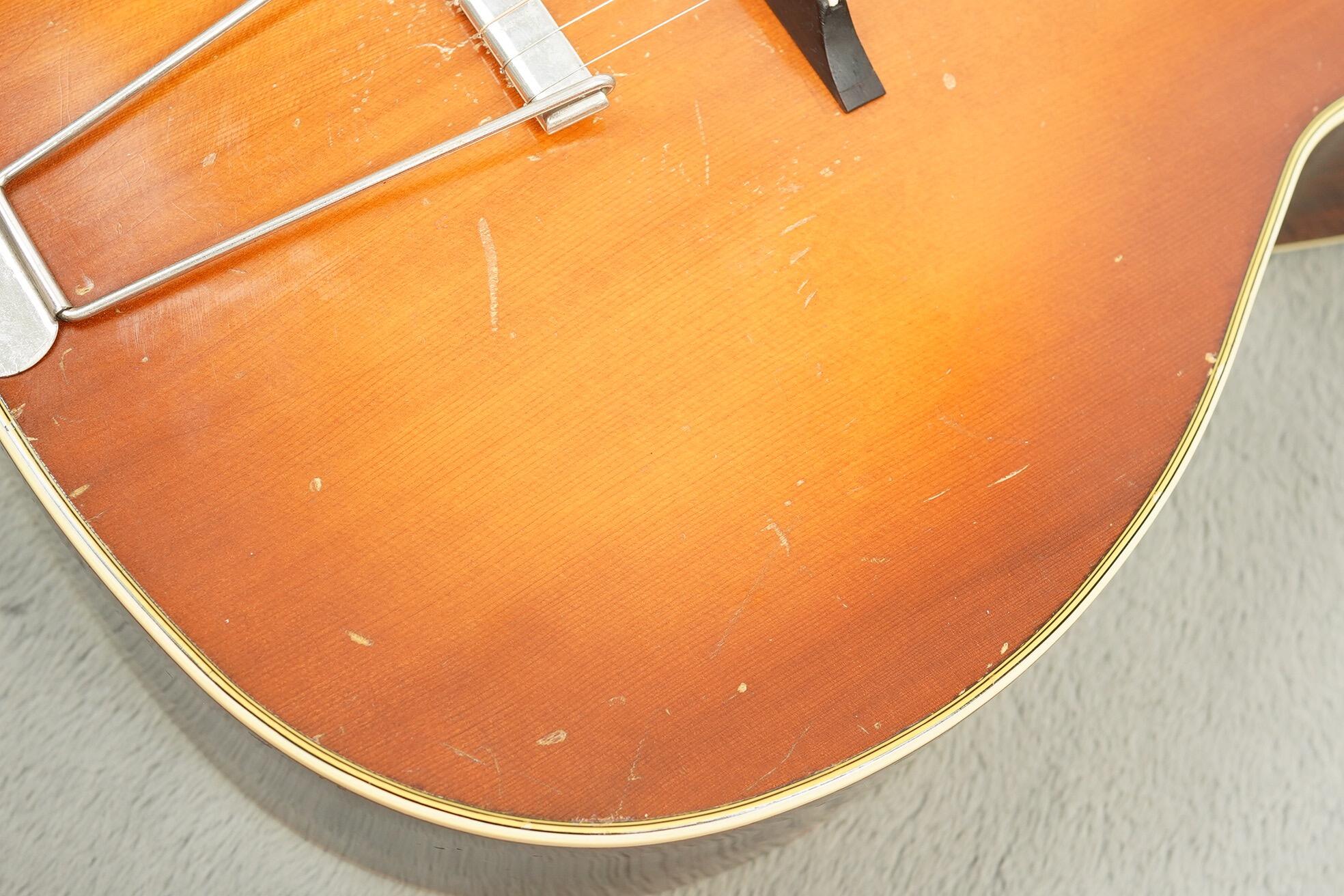
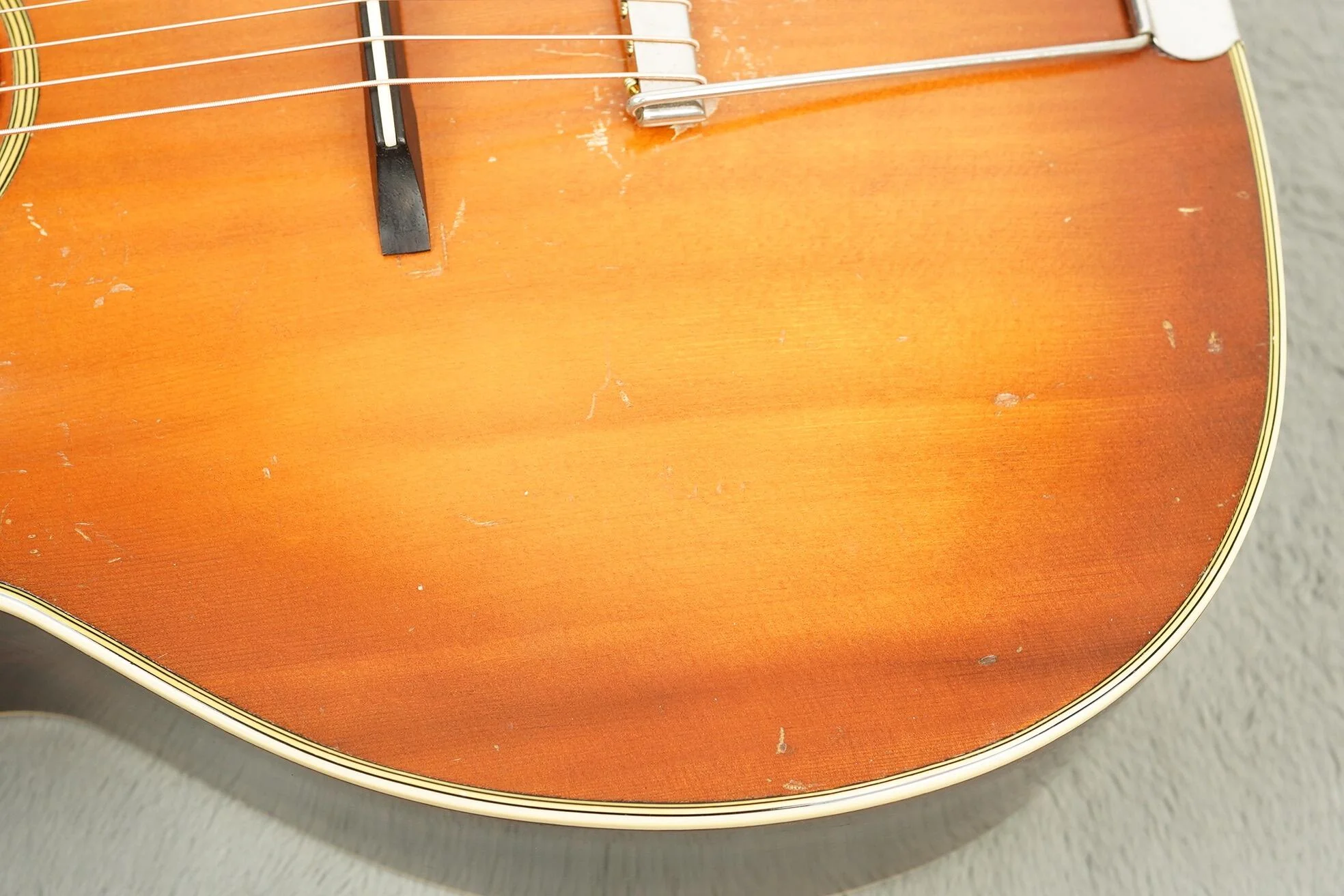
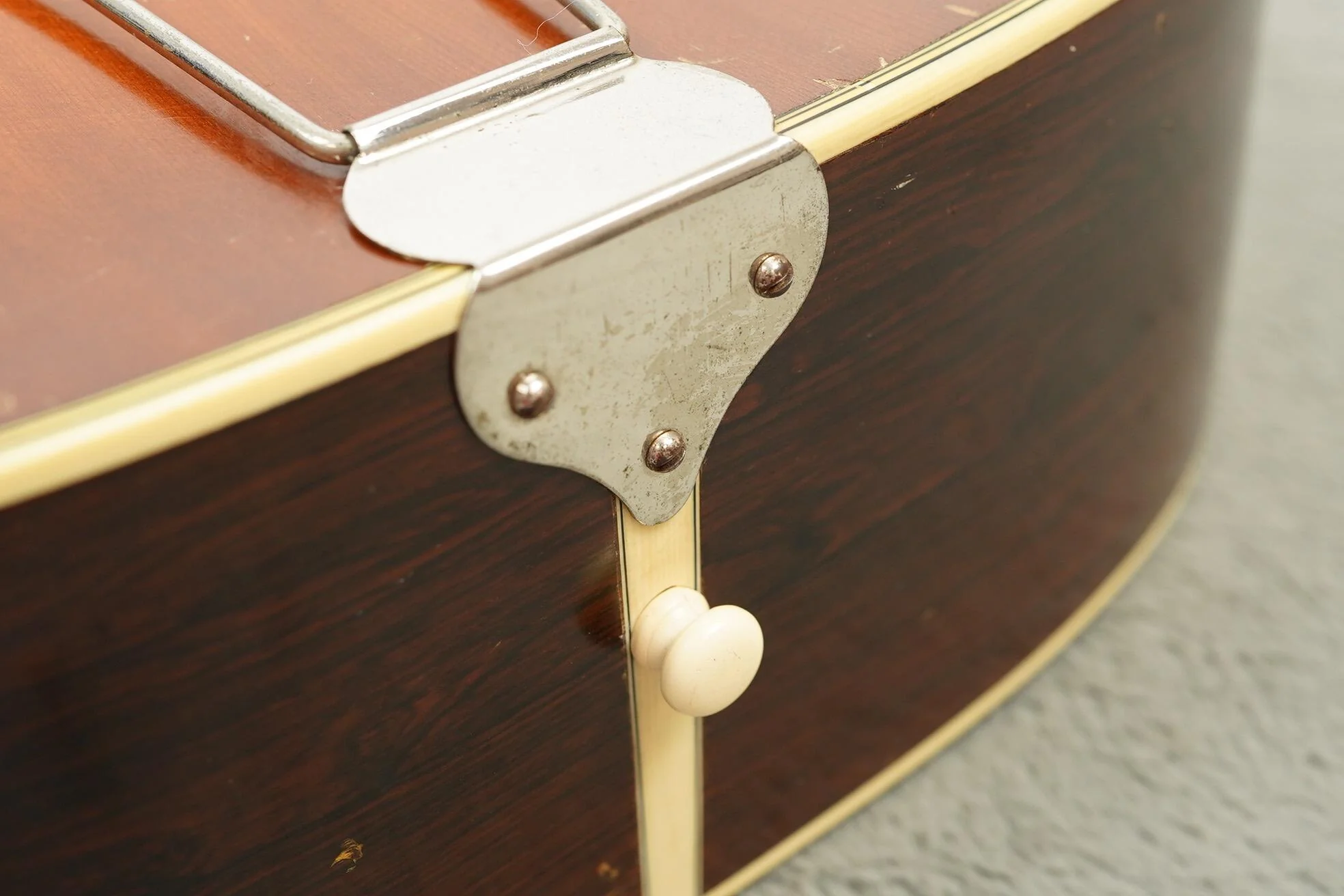
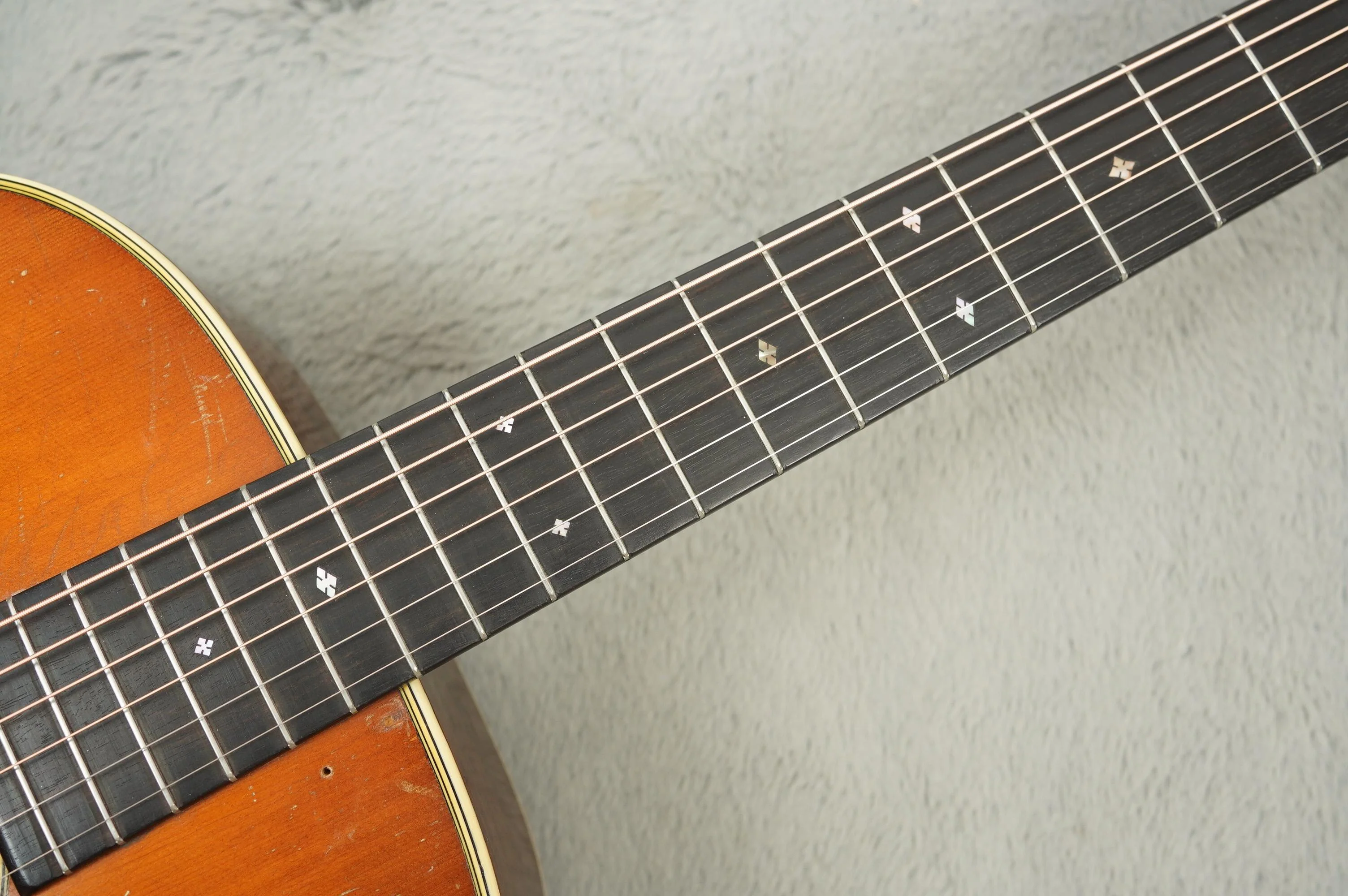
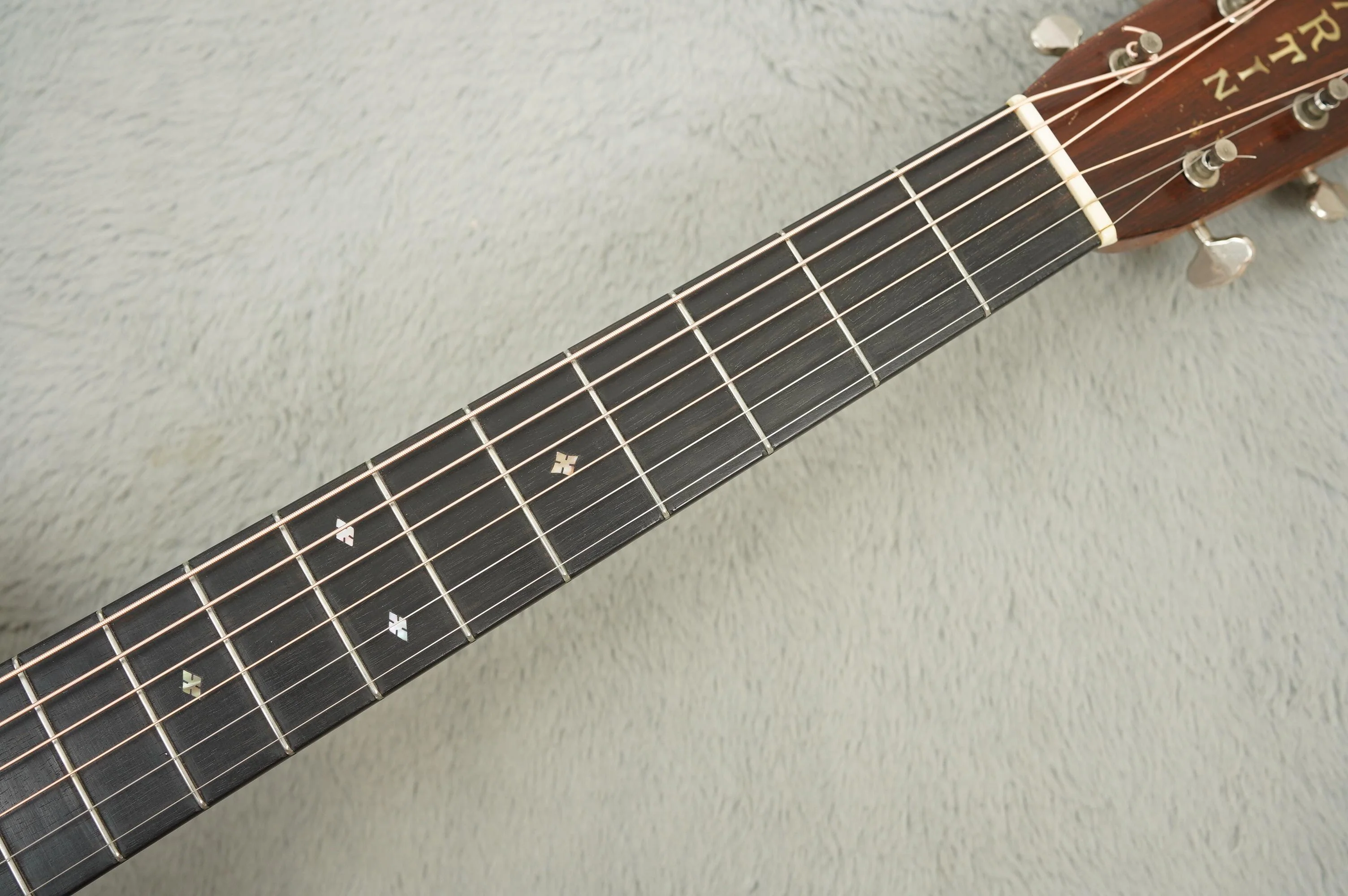
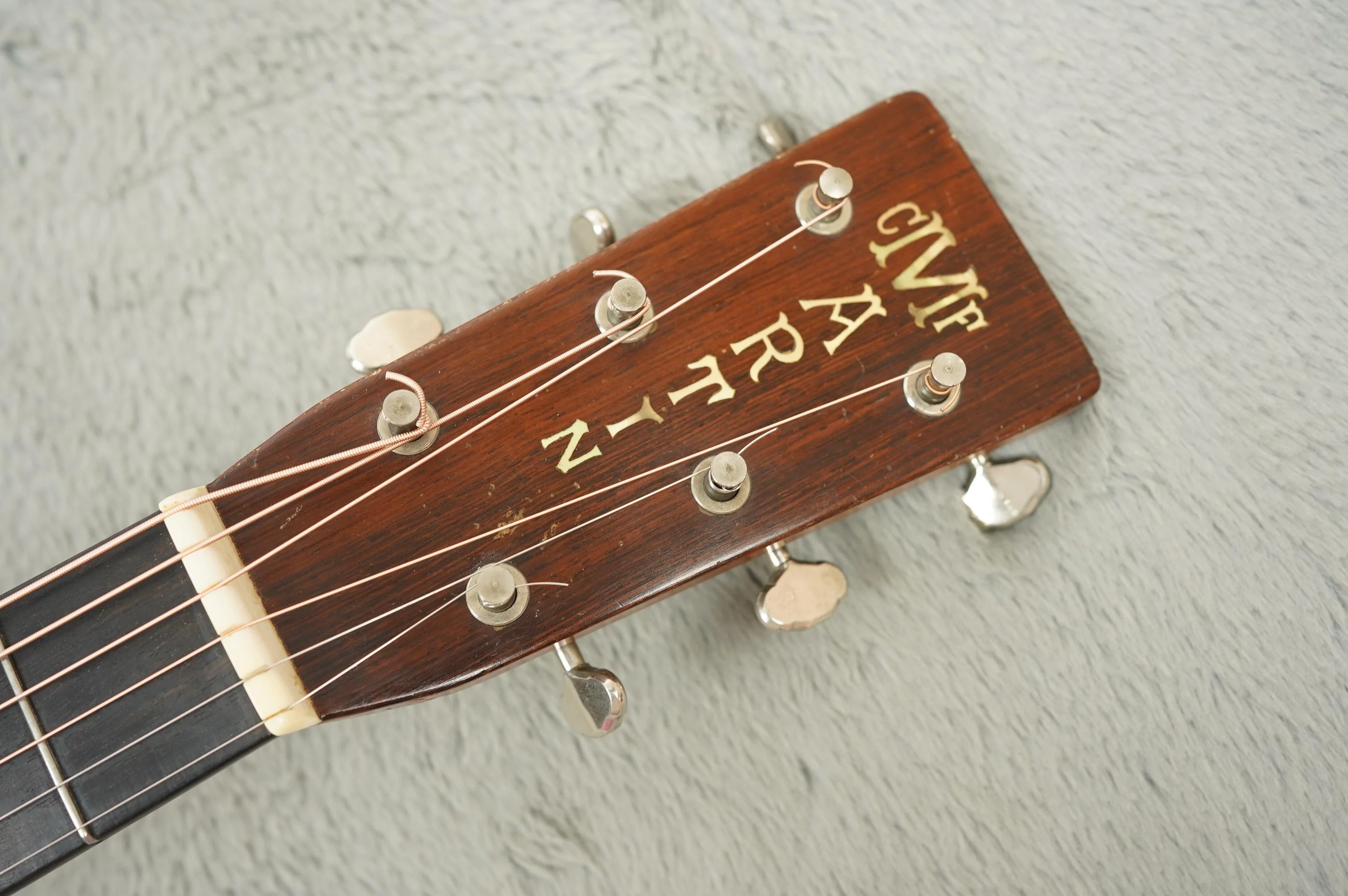
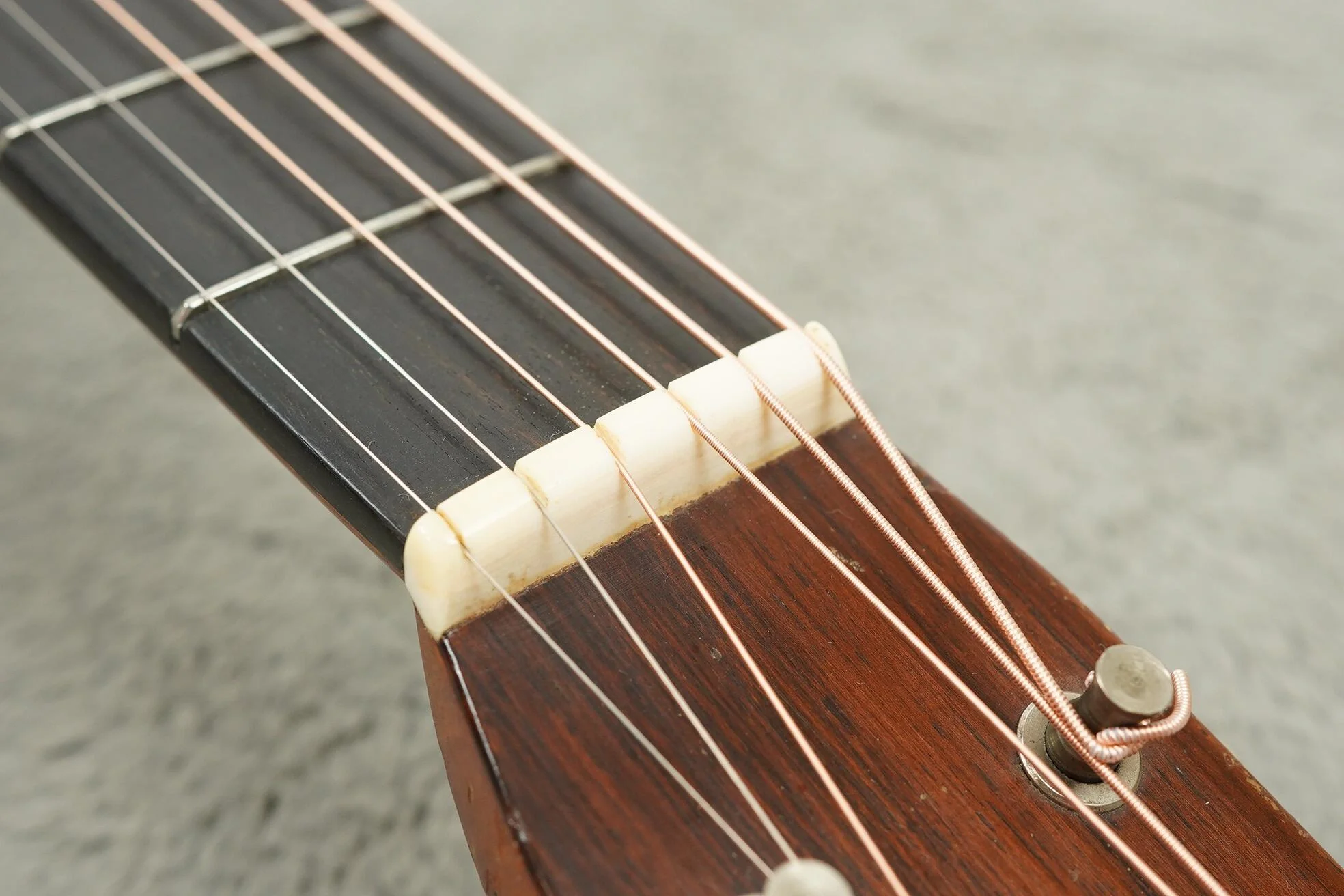
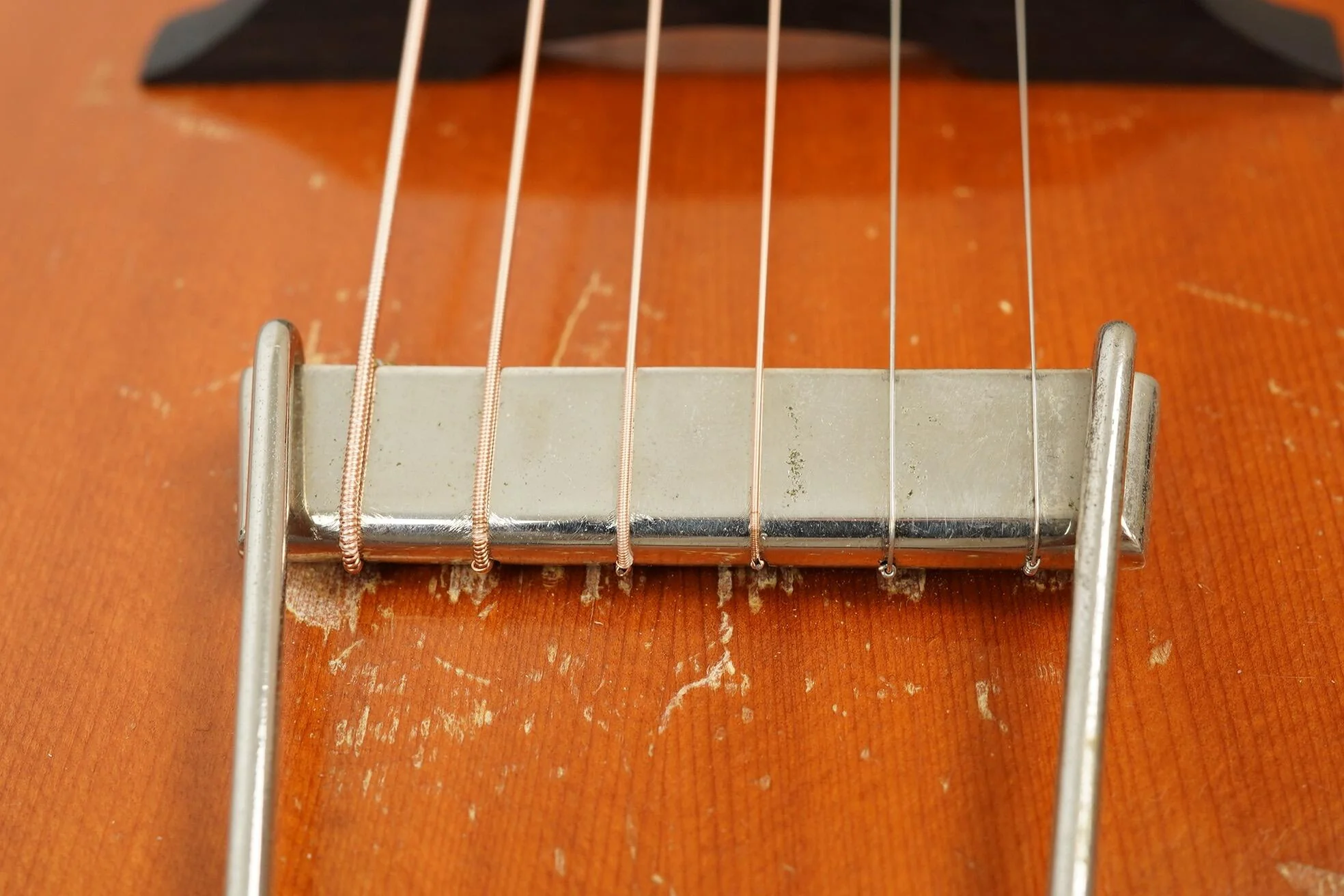
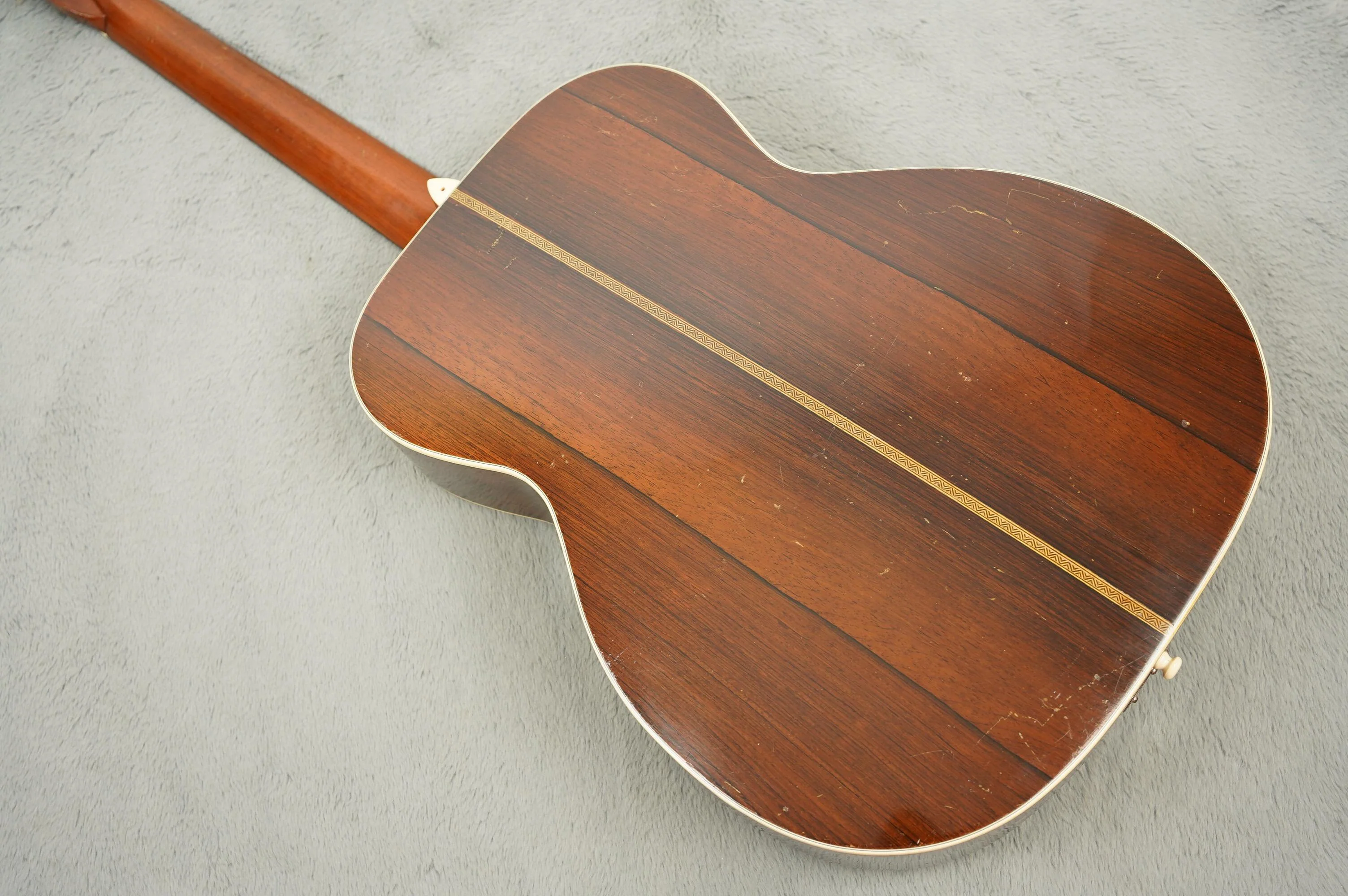
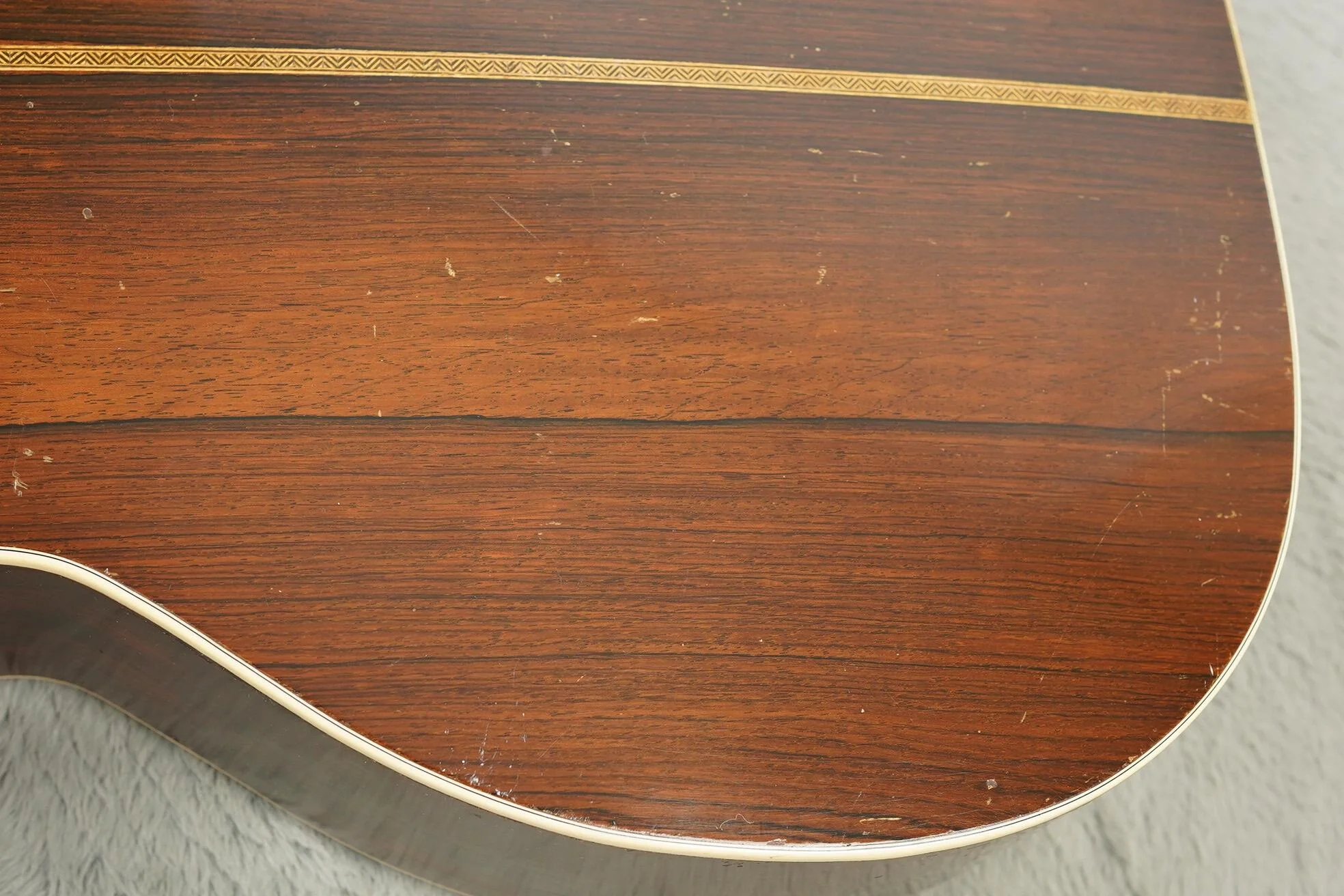
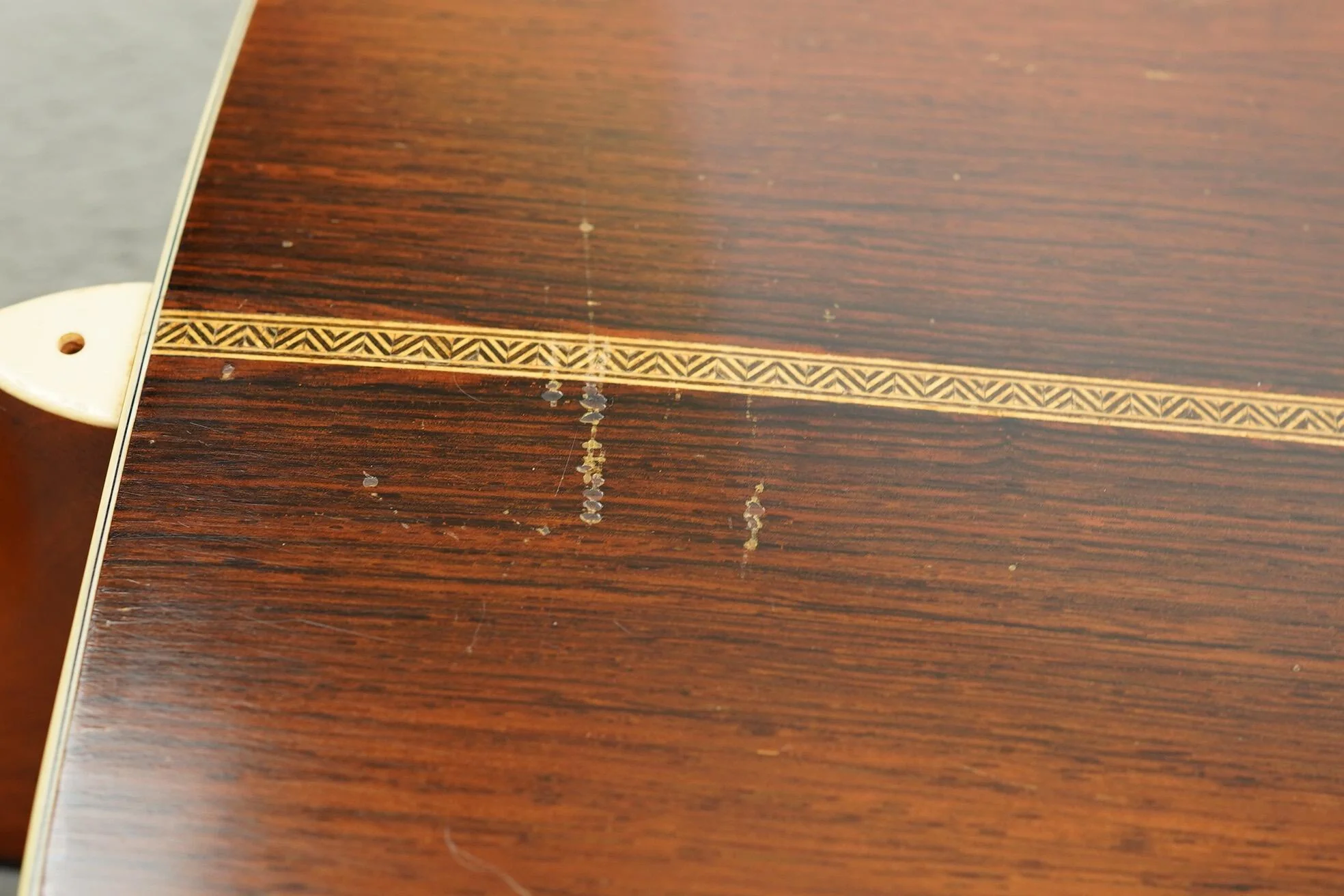
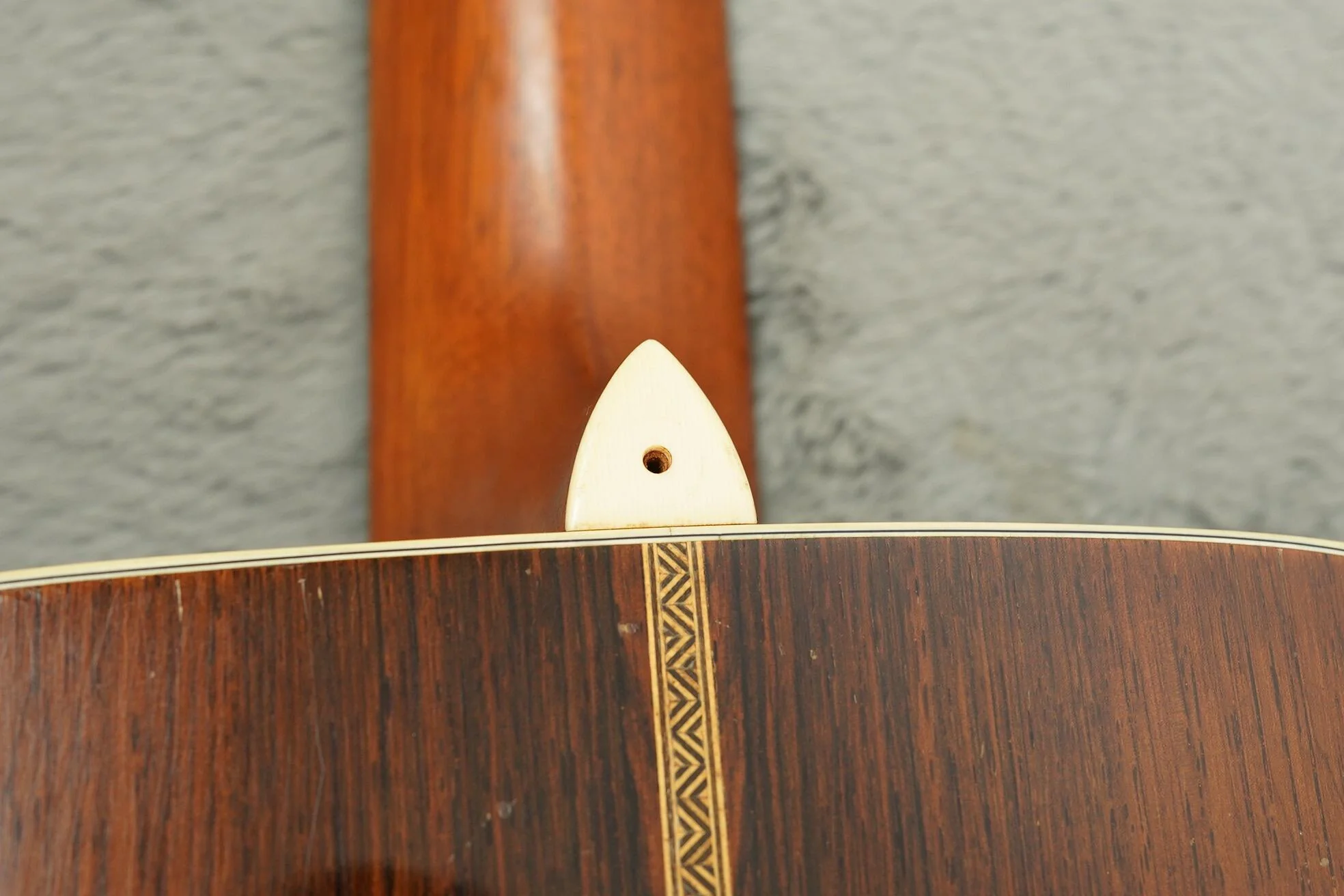
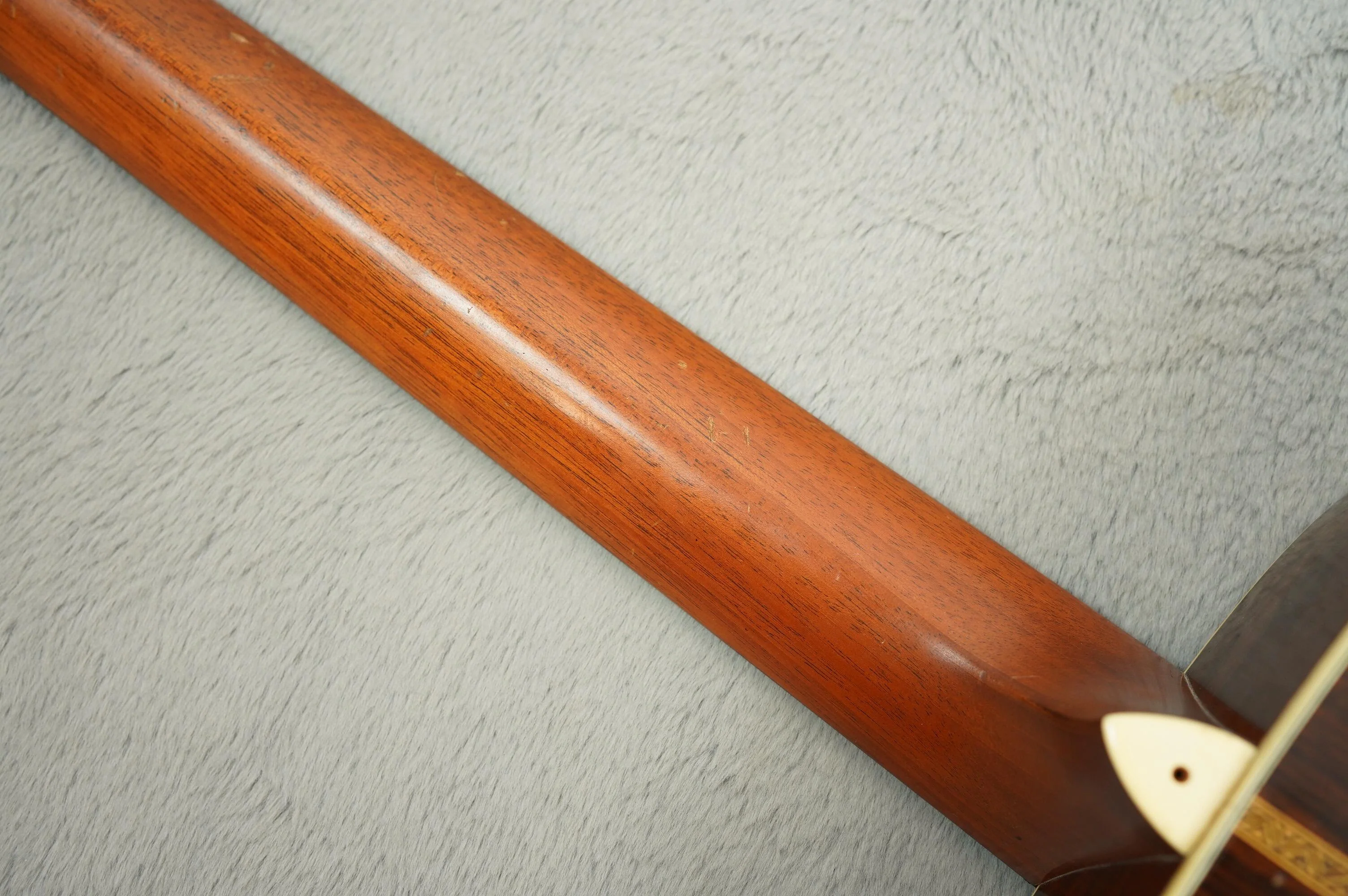
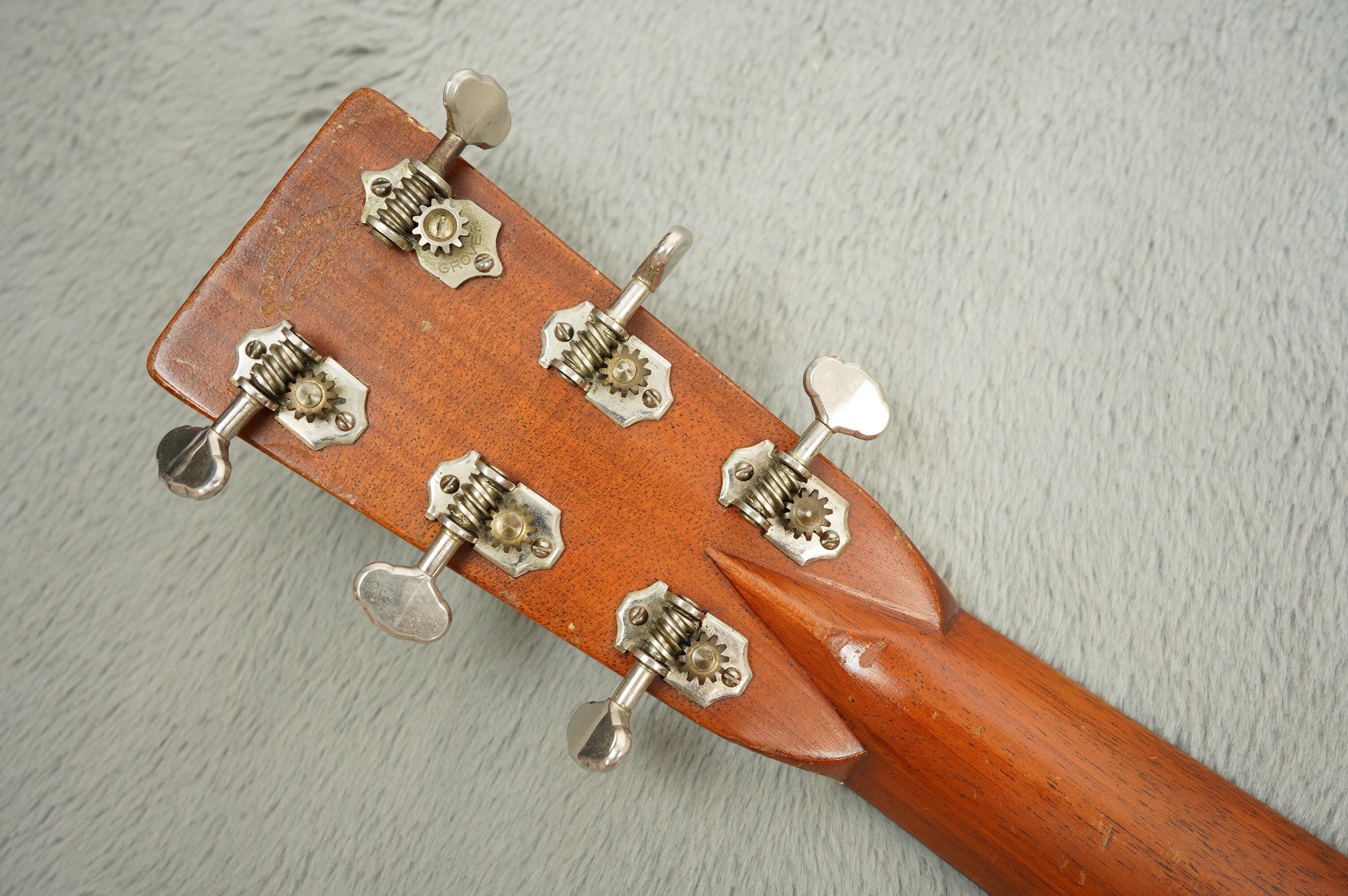
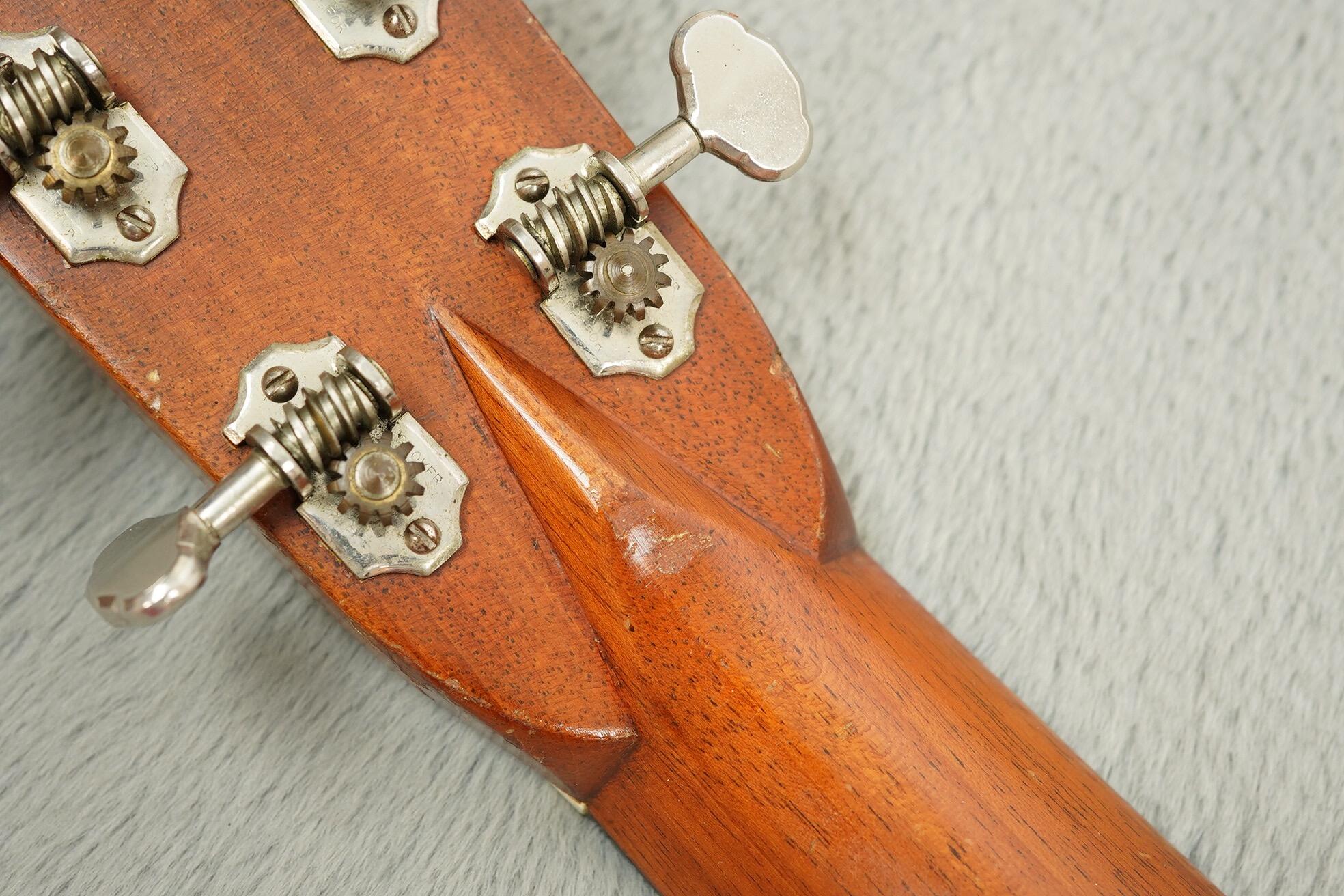
This particular example is in excellent shape. It features a tight-grained, hand-carved Adirondack spruce top, stunning figured bookmatched Brazilian rosewood back and sides, and a single-piece Mahogany neck. The ebony fingerboard is bound and inlaid with elegant mother-of-pearl snowflakes, paired with a vertical “C.F. Martin” peghead logo. Triple body binding, a shaded top finish, original Grover Sta-Tite tuners, floating Ebony bridge and trapeze tailpiece round out the spec. Many surviving C-series Martin's have been converted to OM flat tops, making clean, original examples like this one a fairly rare find.
Sonically, it delivers a warm, articulate voice with more richness and nuance than its Gibson contemporaries—ideal for fingerstyle and chord-melody playing.
A remarkable piece of Martin’s early experimentation as they enter their golden era, this 1931 C-2 offers not just a window into the company’s transitionary years but also a tonally rewarding, highly collectible vintage archtop in outstanding condition. A real gem for the discerning player or collector.
Product Information
Product Information
Shipping & Returns
Shipping & Returns
Description
A rare and beautifully preserved piece of Martin history, this 1931 Martin C-2 is one of the cleanest and most original examples we've had. Introduced in 1931 as part of Martin’s first foray into archtop guitars, the C-series consisted of the C-1 (mahogany), C-2 (rosewood), and the more ornate C-3 (rosewood with gold hardware). All three shared a hand-carved, round-soundhole top, flat back, and a 25.4" scale length—rooted more in Martin's flattop heritage than the louder, punchier f-hole designs that were quickly defining the archtop market.
At 15" across the lower bout, with a body depth ranging from 3 3/8" to 4 1/8"—the C-2 was modestly sized for an archtop. Compared to Gibson’s L-5 at 16" wide (soon hit 17"), the Martin felt more intimate and was acoustically more refined, though notably less powerful. That gentler, more lyrical tone proved a tough sell in an era dominated by big band volume demands, and by late 1932 Martin had shifted toward f-hole designs, making early roundhole C-series models like this one relatively scarce today.
This particular example is in excellent shape. It features a tight-grained, hand-carved Adirondack spruce top, stunning figured bookmatched Brazilian rosewood back and sides, and a single-piece Mahogany neck. The ebony fingerboard is bound and inlaid with elegant mother-of-pearl snowflakes, paired with a vertical “C.F. Martin” peghead logo. Triple body binding, a shaded top finish, original Grover Sta-Tite tuners, floating Ebony bridge and trapeze tailpiece round out the spec. Many surviving C-series Martin's have been converted to OM flat tops, making clean, original examples like this one a fairly rare find.
Sonically, it delivers a warm, articulate voice with more richness and nuance than its Gibson contemporaries—ideal for fingerstyle and chord-melody playing.
A remarkable piece of Martin’s early experimentation as they enter their golden era, this 1931 C-2 offers not just a window into the company’s transitionary years but also a tonally rewarding, highly collectible vintage archtop in outstanding condition. A real gem for the discerning player or collector.